
By Nate Raymond
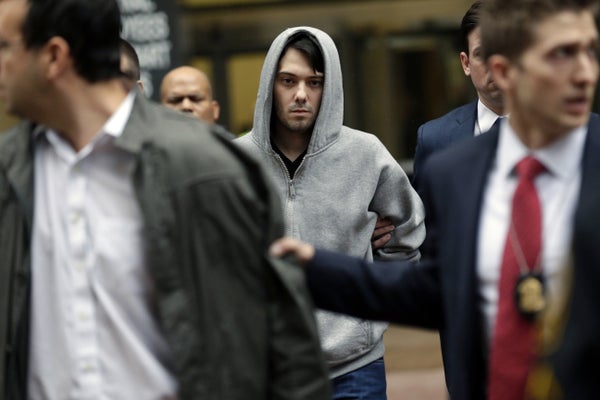
NEW YORK (Reuters) - Martin Shkreli, a lightning rod for growing outrage over soaring prescription drug prices, was arrested by the FBI on Thursday after a federal investigation involving his former hedge fund and a pharmaceutical company he previously headed.
The securities fraud probe of Shkreli, who is now chief executive officer of Turing Pharmaceuticals and KaloBios Pharmaceuticals Inc, stems from his time as manager of hedge fund MSMB Capital Management and CEO of biopharmaceutical company Retrophin Inc, a person familiar with the matter said.
On supporting science journalism
If you're enjoying this article, consider supporting our award-winning journalism by subscribing. By purchasing a subscription you are helping to ensure the future of impactful stories about the discoveries and ideas shaping our world today.
He is expected to be named in an indictment in federal court in Brooklyn, New York, along with Evan Greebel, who was Retrophin's outside counsel while he was a partner at law firm Katten Muchin Rosenmann, prosecutors said.
Brooklyn U.S. Attorney Robert Capers is scheduled to hold a press conference with officials from the Federal Bureau of Investigation and U.S. Securities and Exchange Commission at noon EST (1700 GMT) to announce the charges, his office said.
Reuters witnessed Shkreli's arrest at the Murray Hill Tower Apartments in midtown Manhattan. Law enforcement including Federal Bureau of Investigation agents could be seen escorting Shkreli, who was wearing a hoodie, into a car.
FBI spokeswoman Kelly Langmesser confirmed the arrests of Shkreli and Greebel.
Shares of KaloBios were down 53% at $11.03 in the premarket. Retrophin fell 6% to $20.02.
Turing and KaloBios declined to comment. Lawyers for Retrophin and Shkreli did not immediately respond to a request for comment. Efforts to reach Greebel were not immediately successful, and a lawyer could not be immediately identified.
A privately held startup, Turing sparked controversy earlier this year after news reports that it had raised the price of Daraprim (pyrimethamine), a 62-year-old drug used for protozoal infections, to $750 a tablet from $13.50 after acquiring it.
Shkreli, 32, was expected to be charged on Thursday for illegally using Retrophin assets to pay off debts after MSMB lost millions of dollars, the source said.
The probe, by federal prosecutors in Brooklyn, dates back to at least January when Retrophin said it received a subpoena from prosecutors seeking information about its relationship with Shkreli.
That subpoena also sought information about individuals or entities that had invested in funds previously managed by Shkreli, Retrophin said in a regulatory filing.
MSMB Capital Management was founded in 2009, and Shkreli announced its closure in 2012. Retrophin was founded in 2012, and Shkreli was its CEO until the company fired him in September 2014.
Retrophin in August sued Shkreli in federal court in Manhattan for $65 million, claiming he had used his control over Retrophin to enrich himself and pay off claims of investors in MSMB, which he had also defrauded.
Shkreli has denied the allegations.
At least two separate Congressional probes have been launched since September on the pricing issues of Daraprim, which had long been available as a generic drug used to treat toxoplasmosis in AIDS patients. Turing is under investigation by the New York state attorney general for antitrust concerns.
At a Senate hearing on drug pricing last week, a doctor who treats babies with life-threatening toxoplasmosis testified that a course of treatment with Daraprim went from about $1,200 to no less than $69,000.