
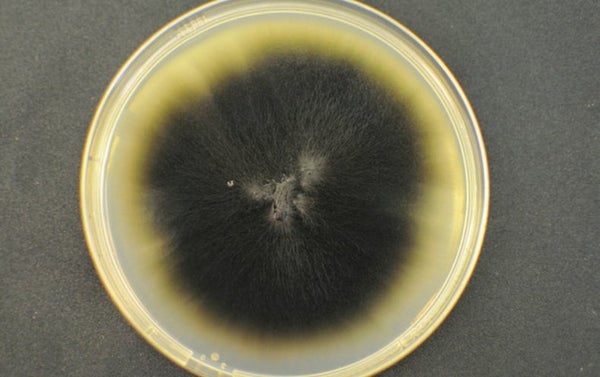
Antarctica might seem an unlikely place to find microbes that degrade wood. The icy continent has no trees, and it lacks the warm, damp conditions typically associated with decomposition. But in recent years several species of fungi have been found on wood structures built there by Ernest Shackleton and other early 20th-century explorers. Scientists grew some of these unusual organisms in the laboratory and found they produced never before seen chemicals—which researchers are now investigating for potential applications in medicine.
Robert A. Blanchette, a forest pathologist at the University of Minnesota, and his colleagues traveled to Antarctica eight times to sample these fungal specimens. Fungi are the basis for many drugs, including the antibiotic penicillin, the immunosuppressant cyclosporine and the cholesterol buster lovastatin, so Blanchette wondered if these Antarctic species might produce any useful molecules. He teamed up with Christine Salomon, a chemist at the university's Center for Drug Design, to analyze them. Salomon was working off the hypothesis that microorganisms living in harsh, nutrient-starved environments need to “protect their turf” and often maintain a competitive edge over other fungi or bacteria by making antimicrobial compounds. These chemicals could potentially be transformed into much needed pharmaceutical therapies.
In a study published in April in Phytochemistry, Salomon grew several species of the Antarctic fungi Cadophora and found they produced nine compounds new to science. None of the compounds proved effective at killing human pathogens in lab tests, nor were they toxic to two types of mammalian cancer cells, however. Although Salomon admits this result was “really surprising and kind of disappointing,” she says it does not necessarily rule out some medical potential.
On supporting science journalism
If you're enjoying this article, consider supporting our award-winning journalism by subscribing. By purchasing a subscription you are helping to ensure the future of impactful stories about the discoveries and ideas shaping our world today.
One species her team tested made exceptional quantities of a compound called colomitide C—about 1,000 times the concentration of similar compounds she is accustomed to finding in fungi and bacteria. In subsequent, unpublished work, the compound stopped the growth of rapidly regenerating tissue in zebra fish, suggesting an indirect role in inhibiting some fast-growing tumors. Salomon's group also found preliminary evidence showing that colomitide C reversed the growth of breast cancer cells in mice, and her colleagues are now attempting to replicate the findings.