
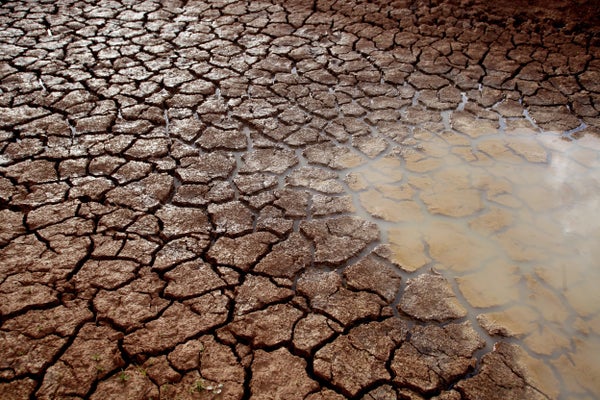
Millions of drinking wells around the world may soon be at risk of running dry. Overpumping, drought and the steady influence of climate change are depleting groundwater resources all over the globe, according to new research.
As much as 20% of the world’s groundwater wells may be facing imminent failure, potentially depriving billions of people of fresh water.
“We found that this undesirable result is happening across the world, from the western United States to India,” said Debra Perrone, a water resources expert at the University of California, Santa Barbara, and co-author of the study.
On supporting science journalism
If you're enjoying this article, consider supporting our award-winning journalism by subscribing. By purchasing a subscription you are helping to ensure the future of impactful stories about the discoveries and ideas shaping our world today.
The research, published yesterday in the journal Science, pulled together construction records from 39 million wells scattered across 40 countries.
Perrone and co-author Scott Jasechko, a fellow water expert at UC Santa Barbara, first recorded the depths of all the wells. They then compared the wells with the groundwater levels, assisted by data from previous studies.
They found that millions of the wells extended less than 5 meters (about 16 feet) below the water table, putting them at risk of running dry. At least 6% of them, and potentially as much as 20%, appear to be in jeopardy.
Those last few meters can dry up quickly, especially in places already stricken by drought.
“In areas where we see extreme rates of groundwater depletion, groundwater levels can decline on the order of a meter or more a year," Jasechko said.
In some places, including parts of the drought-stricken western United States, it’s already happening.
Residents of California’s Central Valley are preparing for another arid summer and the rising risk of dry wells, The Fresno Bee reported yesterday. It’s a recurring pattern there. Studies suggest that thousands of wells in interior California have run dry over the last decade or so, under long-lasting drought conditions.
In fact, Jasechko and Perrone published a separate study in the journal Earth’s Future last year suggesting that thousands of wells across the Central Valley ran dry between 2013 and 2018 alone.
That’s a big threat to rural California communities, where at least 1.5 million people rely on groundwater wells.
Digging deeper wells can help address the problem, when it’s possible. But it’s a solution that may be out of reach for many, the researchers point out. Deeper wells are more expensive to construct and maintain.
“This could raise a number of equity and adaptation concerns over the long term, really highlighting the haves and have-nots of water,” Perrone said.
These concerns are only growing as climate change worsens the risk of severe drought in California and other arid regions around the world.
The new study has helped highlight an invisible crisis, according to James Famiglietti and Grant Ferguson, water experts at the University of Saskatchewan in Canada, who wrote a commentary on the new research also published in Science yesterday.
“As groundwater levels decline around the world, only the relatively wealthy will be able to afford the cost of drilling deeper wells and paying for the additional power required to pump groundwater from greater depths,” they wrote. “Lower-income families, poorer communities, and smaller businesses, including smaller farms, will experience progressively more limited access in the many regions around the world where groundwater levels are in decline.”
As a result, governments around the world should be pouring more resources into monitoring groundwater levels and conserving water resources in places that are at risk, they argued.
Otherwise, they said, “the consequences of millions of wells running dry, and perhaps millions more in the decades to come, would be severe and unparalleled at such a scale in human history.”
Reprinted from E&E News with permission from POLITICO, LLC. Copyright 2021. E&E News provides essential news for energy and environment professionals.
