
On supporting science journalism
If you're enjoying this article, consider supporting our award-winning journalism by subscribing. By purchasing a subscription you are helping to ensure the future of impactful stories about the discoveries and ideas shaping our world today.
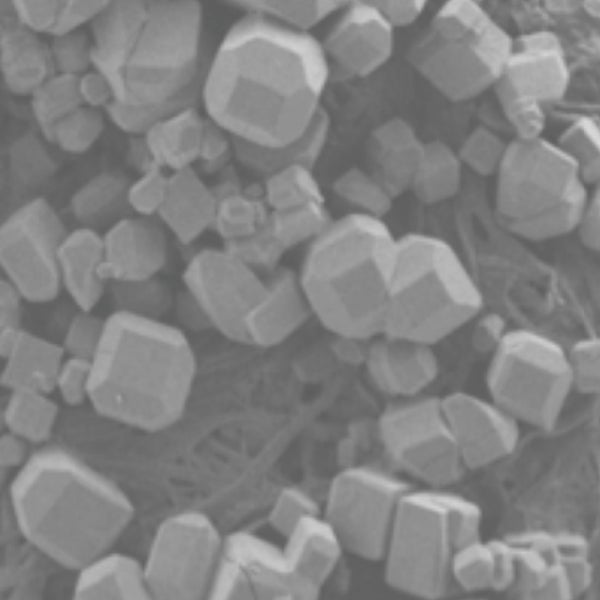
How do you capture a molecule? It may sound like a rhetorical question, but the answer is simple: You use a very tiny cage, like the molecular traps pictured here.
These three-dimensional shapes, called truncated octahedrons, self-assembled out of molecular "tiles" created by researchers at New York University. The geometric regularity of the cages, and the fact that they self-assemble using hydrogen bonds, could help researchers create more such materials in the future.
In order to attain a high enough resolution to reveal the shape of the molecular traps, researchers had to zoom in at the atomic level, using a scanning tunneling microscope. This detailed scan reveals that each trap consists of only 20 ions hydrogen-bonded into a lattice, and has a volume of 2,200 cubic angstroms. Their tiny size means that 20 billion billion traps would fit into the same space taken by average-size raindrop.
But other than the fun of hunting extremely tiny targets, what's the point of a molecular trap? In a prepared statement, team member Mike Ward said, "This makes it possible to separate chemicals based on size or perform reactions inside well-defined cages, which could potentially give you more control over chemical reactivity and reaction products." Caging chemicals could also change their optical or magnetic properties, giving rise to new materials.
—Sophie Bushwick