
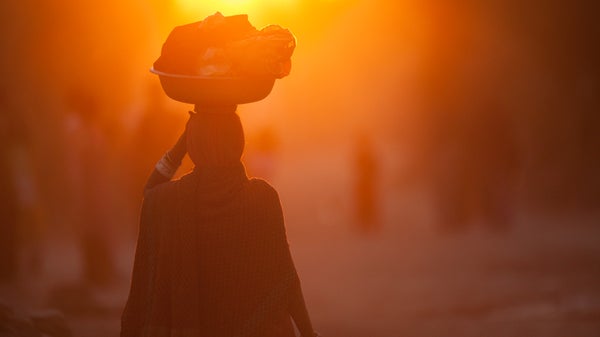
Women in India are committing suicide at an alarming rate. Research published in the October 2018 issue of the Lancet Public Health reveals that in 2016 they accounted for more than 36 percent of female suicide deaths globally, despite making up less than 18 percent of the world’s female population. Suicide is the leading cause of death among Indian women ages 15 to 29, responsible for about 26 to 33 deaths per 100,000 women in that range. According to the Global Health Data Exchange, a database that tracks worldwide health trends and demographics, India has the highest suicide rate among young and middle-aged women for countries with similar sociodemographics.
The situation may be related to a clash between women’s aspirations and the rigidity of their social environment, hypothesizes study author Rakhi Dandona, a professor of global health at the Public Health Foundation of India and the University of Washington. As India has developed, women have become better educated and more empowered, and arranged marriages have declined. Yet in many aspects of society, women still possess lower status and face barriers to opportunity. Dandona and other experts suspect this disconnect may drive some to despair. Suicide rates are especially high in southern Indian states, where development and social advances have accelerated. In contrast, Dandona says, suicide rates in the rural, more traditional northern states could be lower because women there may have “less knowledge that they could actually live a better life.”
“Deaths that occur due to suicide are also a product of the method that is used,” says Vikram Patel, a professor of global health at Harvard University, who was not involved in the Lancet Public Health study. In the West, women attempt suicide more often than men, but men typically use more lethal means, resulting in more deaths. In India, however, Patel says that men and women tend to use the same, more fatal, methods.
On supporting science journalism
If you're enjoying this article, consider supporting our award-winning journalism by subscribing. By purchasing a subscription you are helping to ensure the future of impactful stories about the discoveries and ideas shaping our world today.

Credit: Amanda Montañez; Source: Global Health Data Exchange