
Diseases caused by mosquitoes, ticks and fleas have tripled in the United States within the last 15 years, according to an alarming new report.
The study from the Centers for Disease Control and Prevention finds that cases of vector-borne diseases—those spread by the parasites—jumped from 27,388 in 2004 to 96,075 in 2016.
The findings come at a time of growing concern about the potential influence of climate change on the spread of infectious disease. As temperatures and precipitation patterns change, research suggests that some disease-carrying vectors, like mosquitoes and ticks, may be able to spread into new territories, reproduce more easily, or become more aggressive at seeking out and biting human hosts.
On supporting science journalism
If you're enjoying this article, consider supporting our award-winning journalism by subscribing. By purchasing a subscription you are helping to ensure the future of impactful stories about the discoveries and ideas shaping our world today.
The CDC report makes no mention of climate change and notes that a variety of factors may be causing the uptick. But experts say climate change is likely playing a role.
“We certainly don’t preclude that that’s happening,” lead study author Ronald Rosenberg of the CDC’s Division of Vector Borne Diseases said in an interview.
He emphasized that the study’s findings can’t speak to the exact influence of climate change. But the report points to some changes in the range and distribution of certain vectors that some experts say are likely influenced by climate-related factors.
The area at risk for Lyme disease, for instance—which accounted for 82 percent of all tick-borne diseases reported during the study period—has been expanding. Some of that expansion is almost certainly climate-related, David Fisman, an epidemiologist at the University of Toronto, told E&E News. Ticks that carry Lyme disease have now crept northward all the way up into Canada, whereas a decade ago the disease didn’t exist there.
“They just didn’t have the ability to establish local tick populations because it simply was too cold for them to complete their life cycles,” Fisman said. That’s changing now.
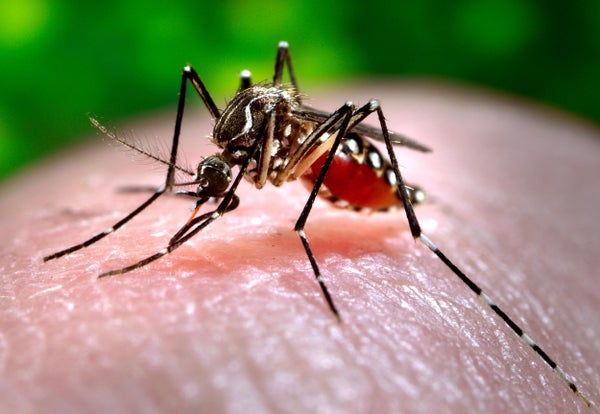
The report also notes that the disease-carrying mosquito species Aedes aegypti has been expanding its range throughout the continental United States and is now prevalent in at least 38 states. Multiple studies have suggested a link between climate-related factors and the expansion of mosquitoes—not only in the United States, but in other parts of the world, as well, Fisman noted.
That said, there are complicating factors, Rosenberg said. Disease-carrying ticks have not only spread north to Canada—they’ve also been spreading southward and westward, and it’s unclear whether climate-related factors or other influences are causing those movements.
And while mosquitoes are clearly spreading, they’re not always causing a disease spike in the places they’re spreading into. The dengue, chikungunya and Zika viruses they’re known to carry have been only rarely documented in the continental United States, with cases more commonly reported in U.S. territories like Puerto Rico. This suggests that, even as climate may be influencing the spread of disease-carrying pests, other factors may be affecting their ability to actually infect humans.
“Climate probably is contributing to it,” said Heidi Brown, an epidemiologist at the University of Arizona who was also not involved with the new study. But she added that “it’s quite challenging to parse it out from changes in human behavior—changes in where those exposures are happening, our activities and how we’re interacting with our environment.”
For instance, as the climate warms, mosquitoes may be able to move into new territories previously too cold for them. But in some places, it may also mean that humans spend more time indoors to stay out of the sun, limiting their exposure to biting insects. Human behavior can play a major role in whether disease-carrying insects are able to increase the spread of disease once they’re present in a given region.
Rosenberg added that the effects of climate change on certain insects are not always obvious. Rising temperatures may help some species spread into cooler regions, but climate change is also likely to affect precipitation and other weather patterns throughout the nation in ways that could either help or hurt vector populations. Modeling studies can help scientists determine what those effects might be in the future.
In these ways, climate change may have a greater effect on vector-borne disease in the future, as it continues to progress—but likely in complex ways that interact with a variety of other factors, including human behavior and other environmental conditions.
“It’s something we’re certainly concerned with and we’re aware of, but there’s no simple answer to the question,” Rosenberg said.
Reprinted from Climatewire with permission from E&E News. E&E provides daily coverage of essential energy and environmental news at www.eenews.net.