New Issue: Orbital Catastrophe Ahead? Read Now

Most Cities Will Be Too Hot to Host 2088 Summer Olympics

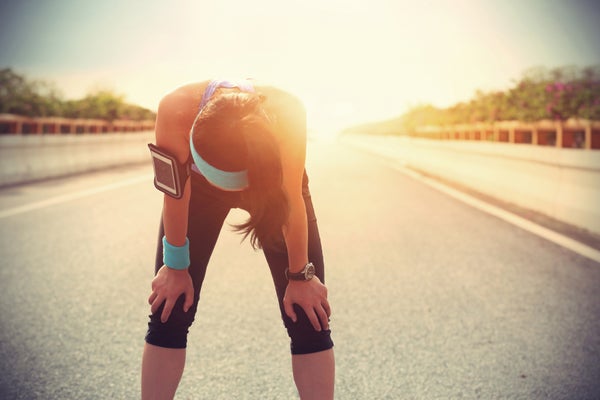
The marathon was used as a benchmark, coupled with climate change models and heat stress measurements 

Join Our Community of Science Lovers!

Most cities might be too hot to host the summer Olympic Games after 2085 because of climate change, according to an analysis in The Lancet.

Using climate modelling and a measure of heat stress to the human body, researchers led by Kirk Smith, an environmental-health researcher at the University of California, Berkeley, judged whether cities would be suitable for hosting the Games.

The authors used a measure known as the wet-bulb globe temperature, which takes into account how factors including temperature, humidity and wind speed affect people, especially during exercise. They used climate models under a high-emissions scenario to predict what this measurement would be for various cities in the future.


On supporting science journalism

If you're enjoying this article, consider supporting our award-winning journalism by subscribing. By purchasing a subscription you are helping to ensure the future of impactful stories about the discoveries and ideas shaping our world today.


The team proposed that it would be low risk to run a marathon if the wet-bulb globe temperature is less than 26 °C in the shade. Any location that had a more than 10% chance of having higher temperatures for the marathon would not be a viable host city.

Nature, August 31, 2016, doi:10.1038/nature.2016.20503

The study looked only at cities in the Northern Hemisphere—home to 90% of the world’s population, and where summer occurs in July and August—and excluded those at an altitude of more than 1,600 metres (altitude had been a problem at the 1968 Mexico Olympics), as well as cities with populations of less than 600,000.

That left 25 suitable cities in western Europe for the 2088 Games—more than half of which are in the United Kingdom—and just 8 in the rest of the Northern Hemisphere, including San Francisco in California, St Petersburg in Russia and Ulaanbaatar in Mongolia.

And according to the researchers' calculations, none of the cities that bid for the 2020 summer Games—Tokyo, Madrid and Istanbul—would be fit to be a host.

This article is reproduced with permission and was first published on August 31, 2016.

Nisha Gaind is Nature’s Bureau Chief, Europe. She has been with Nature since 2013, and moved into her current position in July 2018. She has a MSci degree in astrophysics and physical chemistry from University College London.

More by Nisha Gaind

First published in 1869, Nature is the world's leading multidisciplinary science journal. Nature publishes the finest peer-reviewed research that drives ground-breaking discovery, and is read by thought-leaders and decision-makers around the world.

More by Nature magazine

Subscribe to Support Independent Journalism

Great science journalism requires human expertise, time, effort and creativity. And it costs money. That’s why I and the journalists here at Scientific American hope you’ll join our community.

When you subscribe, you are supporting staff and freelance journalists who are passionate about telling science stories that are true, important and compelling. Our editors and reporters are often experts in their fields, which means they understand the nuances of big discoveries and can untangle the breakthroughs from the hype. With a subscription, you are also supporting rigorous fact-checking to ensure the words we publish are precise and accurate. And you’re supporting original illustrations, graphics and photos that bring you closer to an advanced laboratory, an ice sheet in Antarctica or a space mission in orbit. You’re helping us craft other types of high-quality journalism as well: Our newsletters are carefully written, edited and curated by staffers you have or will come to know and love. Our Science Quickly podcast is based on original reporting, collaboration with editors and scientists and exacting production.

Subscriptions keep this engine running so we can continue to deliver thoughtful, rigorous and independent science journalism to you. In an era of viral misinformation, this work is crucial. If you value what we do, I hope you’ll consider joining us as a subscriber

Thank you,

Jeanna Bryner, Editor in Chief, Scientific American

Subscribe