
By Lisa Rapaport
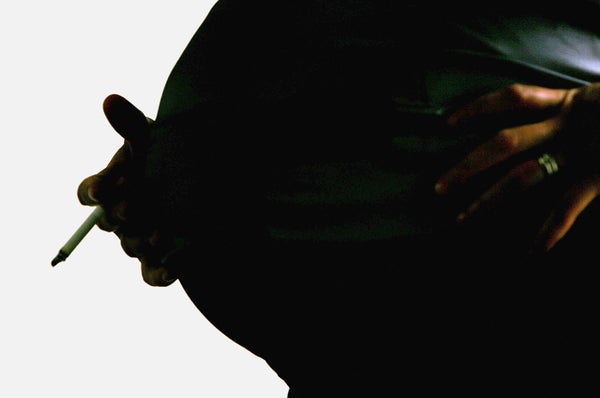
(Reuters Health) - Pregnant women now have another reason to quit smoking - a new analysis links it to differences in their babies' DNA that mirror alterations in adult smokers and suggest how smoking might contribute to certain birth defects.
Researchers analyzed data on mothers and their newborn children to see how smoking influences DNA methylation.
On supporting science journalism
If you're enjoying this article, consider supporting our award-winning journalism by subscribing. By purchasing a subscription you are helping to ensure the future of impactful stories about the discoveries and ideas shaping our world today.
When women smoked daily during pregnancy, researchers identified 6,073 places where their babies' DNA was methylated differently from the DNA of nonsmokers' infants.
Many of the differences were found on or near a collection of genes related to lung and nervous system development, smoking-related cancers and birth defects such as cleft lip and palate.
"We already knew that smoking during pregnancy, or after the child is born, is to be avoided at all costs," said senior study author Dr. Stephanie London, deputy chief of the epidemiology branch at the National Institute of Environmental and Health Sciences in Research Triangle Park, North Carolina.
"This study provides more evidence - signals you can see at birth that are similar to signals you can see in adult smokers," London added by email.
Researchers pooled results from 6,685 mothers and their newborns from studies performed around the world.
Most of the women said they didn't smoke, but about 13% of the women were daily smokers and another 25% admitted to occasional smoking during pregnancy.
To analyze methylation patterns in newborns' DNA, researchers collected samples mainly from blood in the umbilical cord after delivery. In addition to documenting differences between the infants of nonsmokers and regular smokers, the researchers looked at a smaller group of older children and found that at least some of the smoking-related methylation differences in the children of mothers who were smokers during pregnancy persisted.
While the study doesn't prove how maternal smoking may influence child development or disease, the findings suggest that DNA methylation differences might be involved in the appearance of certain birth defects or medical problems in babies born to mothers who smoke, the authors conclude in their report online March 31 in The American Journal of Human Genetics.
It's possible that smoking during pregnancy might hijack systems in babies that determine how DNA is deployed and alter programs in the cells in a way that impacts future health, said Andrea Baccarelli, an environmental epigenetics researcher at Harvard University in Boston, who wasn't involved in the study.
It's also possible that programs in the cells might change to adapt in response to smoking to cope with its adverse effects, Baccarelli added by email.
"I have likened this to a musical score, where the DNA is the score itself," Baccarelli said. "You can imagine how the performers, in advance of the premier, might add marks to the score. They don't modify the score, but they modify the way the score is executed."
Even if the reasons for these cellular changes aren't certain, the message for patients is clear, said Paul Fowler, a director of the Institute of Medical Sciences at the University of Aberdeen in the U.K.
"Everybody should know by now that smoking while pregnant is bad for the baby," Fowler, who wasn't involved in the study, added by email. "What this new study does is so strongly reinforce that message that there can be long-term consequences for their babies after birth."
Women who don't quit before conception still have a chance to improve their baby's health, noted Dr. Amanda Drake, a cardiovascular and pediatric health researcher at the University of Edinburgh and the Royal Hospital for Sick Children in the U.K.
"Sustained smoking leads to more effects," Drake, who wasn't involved in the study, said by email. "Even if women do not stop smoking before conception, stopping smoking during pregnancy is still better than continuing throughout."