
By Ben Gruber
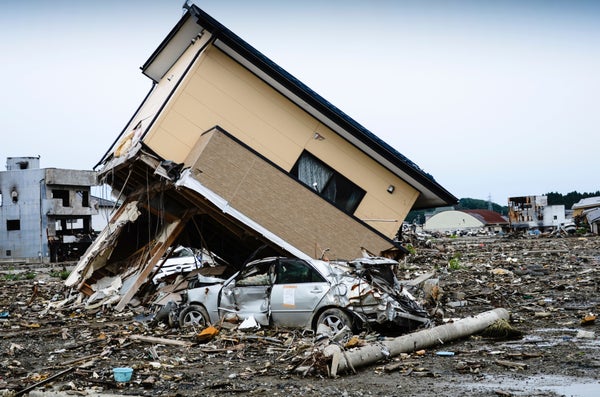
Berkeley, CA (Reuters) - When an earthquake strikes literally every second counts. That was the case 5 years ago when a magnitude 9 quake unleashed a massive tsunami that devastated Japan.
A seismological network kicked into action issuing early warnings, but the massive waves still killed nearly 16,000 people and caused an estimated $300 billion (USD) in damage.
On supporting science journalism
If you're enjoying this article, consider supporting our award-winning journalism by subscribing. By purchasing a subscription you are helping to ensure the future of impactful stories about the discoveries and ideas shaping our world today.
Since then scientists have been working to improve detection systems in the hopes of generating more accurate earthquake data and ultimately buying people a bit more time to flee a soon to be disaster zone.
Now researchers are hoping to tap into new pool data. It turns out the technology in conventional seismological instrumentation exists in every smartphone on the planet.
"The idea is if we can harness the accelerometers in those smart phones then we can collect massive amounts of data. It could really revolutionize how we understand earthquakes and earthquake effects," said Richard Allen, the director of the Seismological Laboratory at the University California, Berkeley.
Allen and his team have developed a smartphone app called 'MyShake' designed to monitor a phones accelerometer data and send alerts to a central server when seismic activity registers.
He says accelerometers in phones are nowhere near as sensitive as conventional instrumentation, but what they lack in sensitivity they make up for in numbers. Real time data from phones could equate to more warning time.
"So the amount of warning time we might be talking about depends of course on where you are relative to the earthquake. We are talking about seconds, tens of seconds, best case scenario is a few minutes before and earthquake, tens of minutes potentially for tsunamis," said Allen.
The smartphone data is meant to compliment existing earthquake monitoring networks, according to Allen, but he adds that many of the regions most prone to deadly earthquakes and tsunami don't have reliable early warning systems. In those places, he says, this new source of data could prove to be a game changer.
"There is no seismic instrumentation but there are many many smartphones often so if we can harness the smartphones we can provide some sort of warning in those countries."
The app can be downloaded the Labs website at myshake.berkeley.edu
