Mysteries of Mind and Body

Maria Corte Maidagan

Join Our Community of Science Lovers!


On supporting science journalism

If you're enjoying this article, consider supporting our award-winning journalism by subscribing. By purchasing a subscription you are helping to ensure the future of impactful stories about the discoveries and ideas shaping our world today.


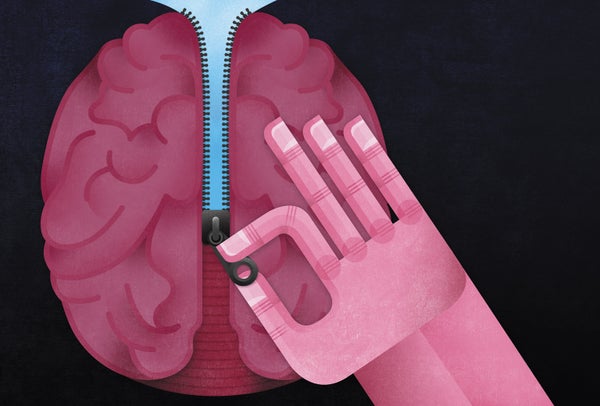
Scientists have lately made remarkable discoveries about our physical and mental well-being—and things that threaten it. In the article leading this section, a pair of Nobel Prize winners explain an amazing brain system that functions like a GPS, tracking us from point to point on a mental grid. Another article follows disease detectives in early 2016 as they figured out that the recent explosion in Zika virus infections was not caused by genetic changes, as some feared; rather human activity is very likely at fault. Recently researchers have had groundbreaking wins against another scourge, successfully treating some cancer patients with therapies that boost immune responses against tumors. Efforts to slow aging look like they might be starting to bear fruit as well. Learn, too, about an astonishingly easy gene-editing technology that can change DNA within sperm and eggs, potentially transforming humanity as the changes get passed forward through generations. The technology raises unnerving questions about what we will do with such power.

SA Special Editions Vol 25 Issue 5sThis article was published with the title “Mysteries of Mind and Body” in SA Special Editions Vol. 25 No. 5s (), p. 34
doi:10.1038/scientificamericansciencestories1216-34

It’s Time to Stand Up for Science

If you enjoyed this article, I’d like to ask for your support. Scientific American has served as an advocate for science and industry for 180 years, and right now may be the most critical moment in that two-century history.

I’ve been a Scientific American subscriber since I was 12 years old, and it helped shape the way I look at the world. SciAm always educates and delights me, and inspires a sense of awe for our vast, beautiful universe. I hope it does that for you, too.

If you subscribe to Scientific American, you help ensure that our coverage is centered on meaningful research and discovery; that we have the resources to report on the decisions that threaten labs across the U.S.; and that we support both budding and working scientists at a time when the value of science itself too often goes unrecognized.

In return, you get essential news, captivating podcasts, brilliant infographics, can't-miss newsletters, must-watch videos, challenging games, and the science world's best writing and reporting. You can even gift someone a subscription.

There has never been a more important time for us to stand up and show why science matters. I hope you’ll support us in that mission.

Thank you,

David M. Ewalt, Editor in Chief, Scientific American

Subscribe