
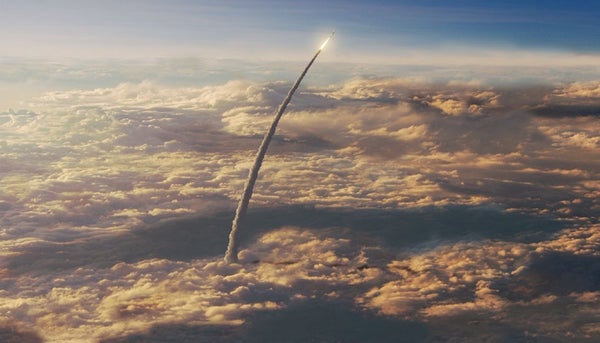
In 2018 the Space Launch System (SLS), the most powerful rocket ever built, will blast off into deep space. The event will serve as an astronaut-readiness test, but 13 shoe-box-sized satellites—called CubeSats—will take advantage of the “free” ride off Earth. NASA recently announced a handful of these mini missions, and their goals are as different from one another as the moon is from an asteroid. A sampling includes:
NEAR-EARTH ASTEROID SCOUT
The NEA Scout satellite will collect data about the spin, topography and surface compositions of asteroid 1991 VG, a near-earth object that could become a landing site for future spacecraft.
On supporting science journalism
If you're enjoying this article, consider supporting our award-winning journalism by subscribing. By purchasing a subscription you are helping to ensure the future of impactful stories about the discoveries and ideas shaping our world today.
Project of NASA Marshall Space Flight Center and NASA Jet Propulsion Laboratory
BIOSENTINEL
This CubeSat is set to carry the first living organisms beyond low-Earth orbit since 1972: yeast. During the 18-month mission, a multitude of sensors will monitor the type and intensity of radiation the yeast encounter, as well as how they fare. Radiation exposure is a major concern for upcoming crewed missions headed for more distant destinations, such as Mars.
Project of NASA Ames Research Center
CUSP (CUBESAT TO STUDY SOLAR PARTICLES)
This weather station comes packed with a magnetometer, ion spectrograph and miniaturized proton telescope. It will monitor space events in real time, including incoming radiation and solar wind, in an effort to understand how geomagnetic storms form and affect Earth.
Project of NASA Goddard Space Flight Center and Southwest Research Institute
LUNAR ICECUBE
As it orbits the moon, Lunar IceCube will perform the most comprehensive scan of Earth's satellite for water to date. Previous probes have found traces of the molecule, but this one is optimized to detect water in all its forms. Accessible resources in space are considered essential for longer crewed missions.
Project of Morehead State University
CUBE QUEST CHALLENGE TOURNAMENT WINNERS
In 2017 three missions will be chosen from entries submitted by Americans unaffiliated with NASA or other government agencies. Prizes will be awarded to the teams that enter lunar orbit, travel the farthest into space or maintain the longest communication with Earth.