
NASA’s Artemis II mission has spent almost 48 hours in space as it wings its way to the moon. At a press conference on Friday, space agency officials said that the astronauts onboard—Reid Wiseman, Victor Glover, Jeremy Hansen and Christina Koch—are faring well and “in great spirits.”
“They are really excited about the opportunity to be there,” said Lakiesha Hawkins, acting deputy associate administrator for NASA’s Exploration Systems Development Mission Directorate, at the press conference. “There’s a lot of fun things going on, in addition to a lot of hard work.”
Friday is the third official day of the mission’s 10-day journey around the moon and back. On Thursday the spacecraft performed a maneuver called a translunar injection burn, which set it on a path to the lunar far side. That burn was so successful that Houston Mission Control has decided that a smaller correction burn planned for tonight will not be necessary, given that Orion is so on target. Instead it will be folded into a planned burn tomorrow.
On supporting science journalism
If you're enjoying this article, consider supporting our award-winning journalism by subscribing. By purchasing a subscription you are helping to ensure the future of impactful stories about the discoveries and ideas shaping our world today.
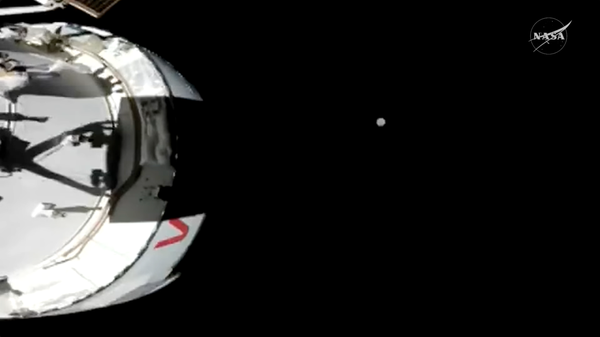
And now the target is in sight: “It was really great to wake up this morning and look out the window and see the full moon off the front of the vehicle,” said Wiseman on NASA’s livestream of the Orion capsule earlier on Friday. “There's no doubt where we are heading right now.”
Wiseman and the other three crew members are the first people to leave Earth orbit since the last crewed moon mission, Apollo 17, in 1972.
So far, the astronauts have spent Friday getting some well-earned rest, exercising on the space capsule’s flywheel machine and eating. They also got a chance to talk with their families. Later on Friday the crew members are due to take part in several life-support activities, including a zero-g CPR training session.
NASA is also looking ahead to what the astronauts will see of the moon’s far side during Monday’s planned six-hour science observation period. Officials think about 20 percent of the far side will be visible for the astronauts to photograph, and this will include a number of features that have never before been seen by human eyes. Among them are the full Orientale Basin, Pierazzo Crater and Ohm Crater.
“Human eyes can resolve details much better than taking a picture and then looking at the picture even with a telephoto lens,” said NASA’s Artemis flight director Judd Frieling at Friday’s press conference. “That observation that the scientists are looking for is really what’s key, even from as far as away as ... 4,000 miles.”