NASA just dropped a stunning new Hubble image of a ‘Cosmic Sea Lemon’ 5,000 light-years away

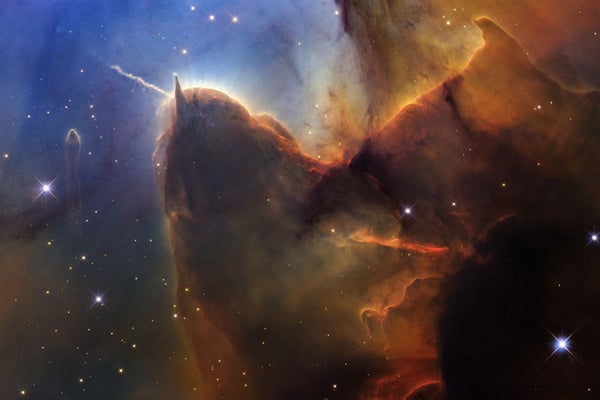
The Hubble Space Telescope turns 36 this year. And to celebrate, it released an incredible new image of the Trifid Nebula

Formation of gas in a stellar nursery.

A Hubble Space Telescope image of the Trifid Nebula in 2026.

NASA/ESA/STScI/Joseph DePasquale/STScI

Join Our Community of Science Lovers!

Sometimes it pays to return to the places you’ve been before. That’s certainly the case for NASA’s Hubble Space Telescope, which just released an ethereal new image of a strange formation that the agency calls a “Cosmic Sea Lemon” or a “Cosmic Sea Slug” hidden inside a stellar nursery some 5,000 light-years away.

Hubble has seen this formation before. In 1997 the telescope photographed the gassy region inside the Trifid Nebula, which lies within the constellation Sagittarius.

Astronomers decided to re-create the original Hubble image in honor of the 36th anniversary of the space telescope’s launch on April 24, 1990. In the new photograph, the Trifid Nebula is just as cloudy as ever—but there are a few key differences between the two images.


On supporting science journalism

If you're enjoying this article, consider supporting our award-winning journalism by subscribing. By purchasing a subscription you are helping to ensure the future of impactful stories about the discoveries and ideas shaping our world today.
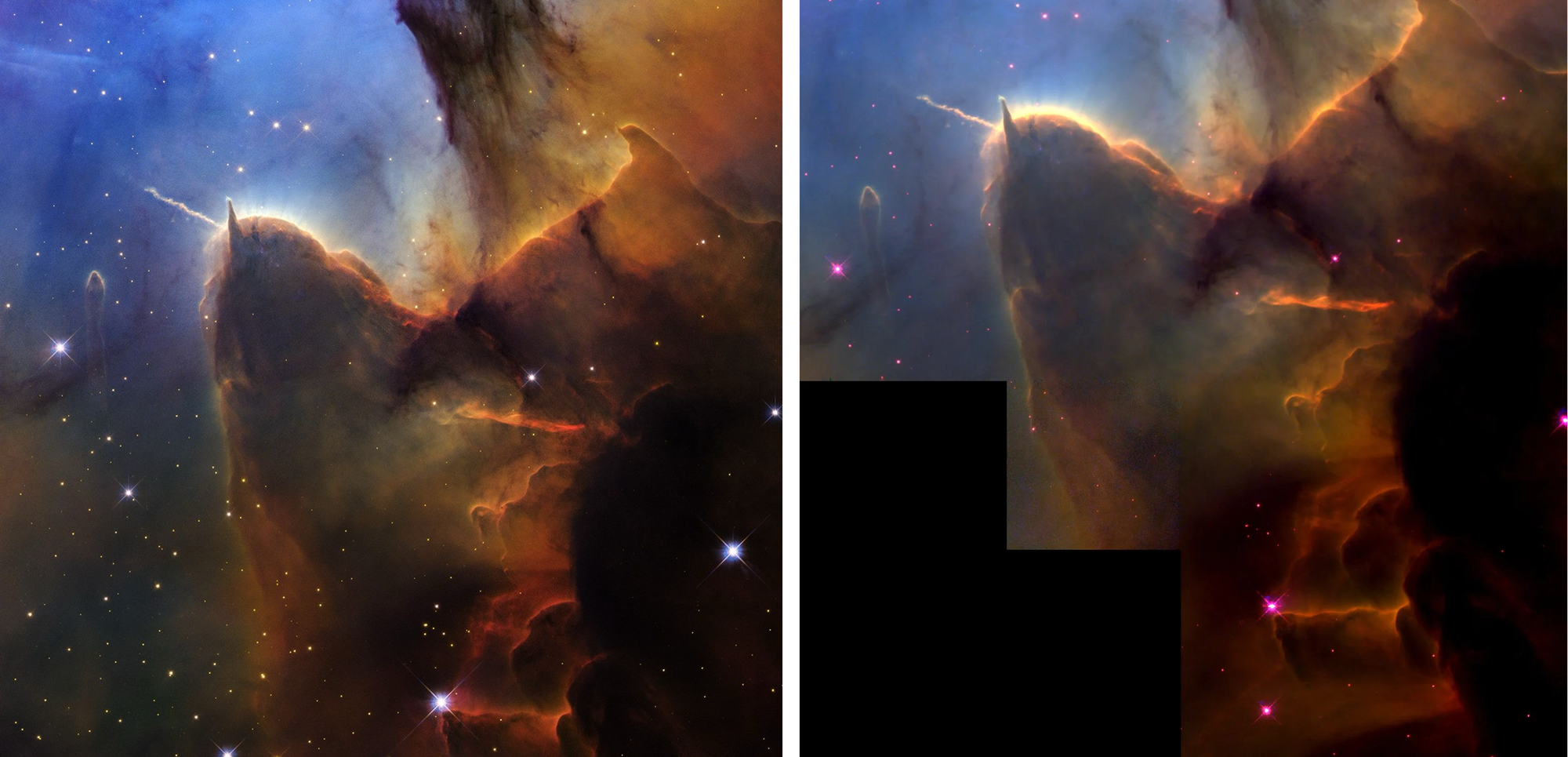

Side-by-side images of a stellar nursery at different times.

Images of the Trifid Nebula taken in 2026 (left) and 1997 (right).

NASA/ESA/STScI/Joseph DePasquale/STScI/Jeff Hester/Arizona State University

The formation’s “horn”—a jet of plasma expelled by a protostar—is now noticeably longer than it appeared nearly three decades ago. And a slash of orange and red along the Cosmic Sea Lemon’s “body” appears to have expanded to the right. These subtle changes may help researchers better understand how stars are forming in a notably active stellar nursery.

The image is also a potent reminder of how far Hubble has come. The space telescope was originally expected to operate for about 15 years. But thanks to a few tune-ups, NASA now expects it to continue capturing images of the universe until at least the mid-2030s.

Jackie Flynn Mogensen is a breaking news reporter at Scientific American. Before joining SciAm, she was a science reporter at Mother Jones, where she received a National Academies Eric and Wendy Schmidt Award for Excellence in Science Communications in 2024. Mogensen holds a master’s degree in environmental communication and a bachelor’s degree in earth sciences from Stanford University. She is based in New York City.

More by Jackie Flynn Mogensen

It’s Time to Stand Up for Science

If you enjoyed this article, I’d like to ask for your support. Scientific American has served as an advocate for science and industry for 180 years, and right now may be the most critical moment in that two-century history.

I’ve been a Scientific American subscriber since I was 12 years old, and it helped shape the way I look at the world. SciAm always educates and delights me, and inspires a sense of awe for our vast, beautiful universe. I hope it does that for you, too.

If you subscribe to Scientific American, you help ensure that our coverage is centered on meaningful research and discovery; that we have the resources to report on the decisions that threaten labs across the U.S.; and that we support both budding and working scientists at a time when the value of science itself too often goes unrecognized.

In return, you get essential news, captivating podcasts, brilliant infographics, can't-miss newsletters, must-watch videos, challenging games, and the science world's best writing and reporting. You can even gift someone a subscription.

There has never been a more important time for us to stand up and show why science matters. I hope you’ll support us in that mission.

Thank you,

David M. Ewalt, Editor in Chief, Scientific American

Subscribe