New Issue: Science’s Impossible Questions. Read Now

NASA’s Artemis II crew returns today—here’s what to know ahead of splashdown

After a 10-day mission around the moon, the Artemis II astronauts will have traveled nearly 700,000 miles

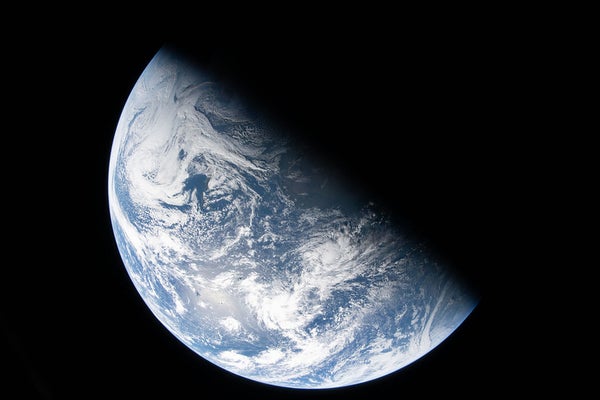
A half Earth

A view of Earth taken by NASA astronaut and Artemis II commander Reid Wiseman from the Orion spacecraft on April 2, 2026.

NASA

NASA has launched four astronauts on a pioneering journey around the moon—the Artemis II mission. Follow our coverage here.

Join Our Community of Science Lovers!

The Artemis II crew is coming home. The four astronauts onboard NASA’s Orion spacecraft are set to splash down Friday evening off the coast of San Diego, Calif., capping a 10-day, nearly 700,000-mile journey around the moon and back.

So far, everything is going to plan: On Thursday NASA astronauts Reid Wiseman, Christina Koch, and Victor Glover and Canadian Space Agency astronaut Jeremy Hansen reviewed return procedures, spoke with flight director Rick Henfling and packed up the spacecraft in preparation for splashdown.

The spacecraft also completed the second of three planned engine burns to keep it on the right return trajectory to enter Earth’s atmosphere. A final burn is scheduled for Friday afternoon.


On supporting science journalism

If you're enjoying this article, consider supporting our award-winning journalism by subscribing. By purchasing a subscription you are helping to ensure the future of impactful stories about the discoveries and ideas shaping our world today.


All systems were “good to go” for reentry, Artemis II Orion vehicle manager Branelle Rodriguez said at a press conference on Thursday.

As of Friday morning at 8:50 A.M. EDT, the Orion spacecraft, named Integrity, was located less than 75,000 miles from home and traveling more than 4,700 miles per hour.

NASA anticipates the crew will reenter Earth’s atmosphere at just under 25,000 mph and ultimately slow to less than 20 mph as they plunge into the Pacific Ocean around 8:07 P.M. EDT.

Despite concerns about the heat shield, which had experienced unexpected damage during Artemis I’s reentry in 2022 that had prompted a subsequent investigation, NASA is confident about the Artemis II crew’s return to Earth.

“Every system we've demonstrated over the past nine days—life support, navigation, propulsion, communications—all of it depends on the final minutes of flight,” said NASA associate administrator Amit Kshatriya at Thursday’s press conference. “We have high confidence in the system and the heat shield and the parachutes and the recovery systems we put together.”

“The engineering supports it. The Artemis I flight data supports it. All of our ground tests supports it. Our analysis supports it. And tomorrow the crew is going to put their lives behind that confidence,” Kshatriya said.

Jackie Flynn Mogensen is a breaking news reporter at Scientific American. Before joining SciAm, she was a science reporter at Mother Jones, where she received a National Academies Eric and Wendy Schmidt Award for Excellence in Science Communications in 2024. Mogensen holds a master’s degree in environmental communication and a bachelor’s degree in earth sciences from Stanford University. She is based in New York City.

More by Jackie Flynn Mogensen

Subscribe to Support Independent Journalism

Great science journalism requires human expertise, time, effort and creativity. And it costs money. That’s why I and the journalists here at Scientific American hope you’ll join our community.

When you subscribe, you are supporting staff and freelance journalists who are passionate about telling science stories that are true, important and compelling. Our editors and reporters are often experts in their fields, which means they understand the nuances of big discoveries and can untangle the breakthroughs from the hype. With a subscription, you are also supporting rigorous fact-checking to ensure the words we publish are precise and accurate. And you’re supporting original illustrations, graphics and photos that bring you closer to an advanced laboratory, an ice sheet in Antarctica or a space mission in orbit. You’re helping us craft other types of high-quality journalism as well: Our newsletters are carefully written, edited and curated by staffers you have or will come to know and love. Our Science Quickly podcast is based on original reporting, collaboration with editors and scientists and exacting production.

Subscriptions keep this engine running so we can continue to deliver thoughtful, rigorous and independent science journalism to you. In an era of viral misinformation, this work is crucial. If you value what we do, I hope you’ll consider joining us as a subscriber

Thank you,

Jeanna Bryner, Editor in Chief, Scientific American

Subscribe