
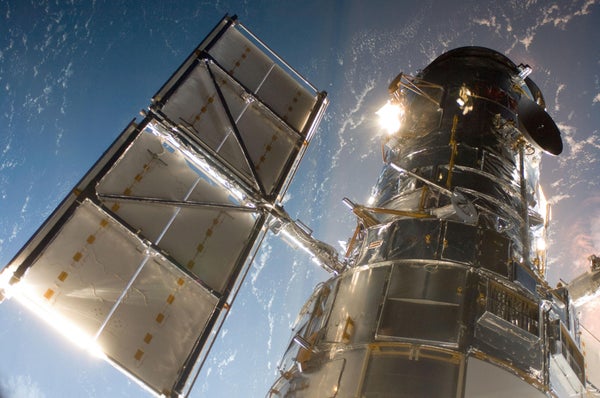
NASA is still working to understand a glitch that took instruments on a venerable space observatory out of commission.
On Oct. 25, the science instruments on the Hubble Space Telescope went into safe mode, according to a brief statement released that day. In a longer statement posted on Monday (Nov. 2), NASA provided additional details about the glitch and the agency’s plan to determine and address the cause to return the observatory to normal operations.
“NASA is continuing to investigate why the instruments in the Hubble Space Telescope recently went into safe mode configuration, suspending science operations,” agency personnel wrote in the full statement. “The instruments are healthy and will remain in safe mode while the mission team continues its investigation.”
On supporting science journalism
If you're enjoying this article, consider supporting our award-winning journalism by subscribing. By purchasing a subscription you are helping to ensure the future of impactful stories about the discoveries and ideas shaping our world today.
According to the new statement, the instruments went offline at 2:38 a.m. EDT (0638 GMT) on Oct. 25. But the agency also noted something it hadn’t previously: that a similar glitch had occurred two days prior but been resolved quickly.
“Hubble’s science instruments issued error codes at 1:46 a.m. EDT Oct. 23, indicating the loss of a specific synchronization message,” the statement reads. “This message provides timing information the instruments use to correctly respond to data requests and commands. The mission team reset the instruments, resuming science operations the following morning.”
When the issue recurred, the error codes indicated “multiple losses of synchronization messages,” the statement notes, and the science instruments followed programming to automatically put themselves into safe mode.
According to the statement, Hubble personnel on the ground are continuing to analyze spacecraft data and are also working on procedures that should result in more data to study; that work will take at least a week to complete.
Hubble launched in April 1990; since then, it has weathered countless issues. The observatory was designed so that astronauts aboard NASA’s space shuttles could visit the facility to conduct repairs and upgrades; the last such mission flew in 2009 and the spacecraft has been maintained solely from the ground in the years since.
This current issue appears less serious than a computer glitch that Hubble experienced this summer that affected the entire observatory, sidelining it for more than a month and requiring the team to switch Hubble to its backup hardware.
Copyright 2021 Space.com, a Future company. All rights reserved. This material may not be published, broadcast, rewritten or redistributed.