New Issue: Orbital Catastrophe Ahead? Read Now

Nebraska Regulators Approve Keystone XL Pipeline Route

The decision lifted the last big regulatory obstacle for the long-delayed project

Join Our Community of Science Lovers!

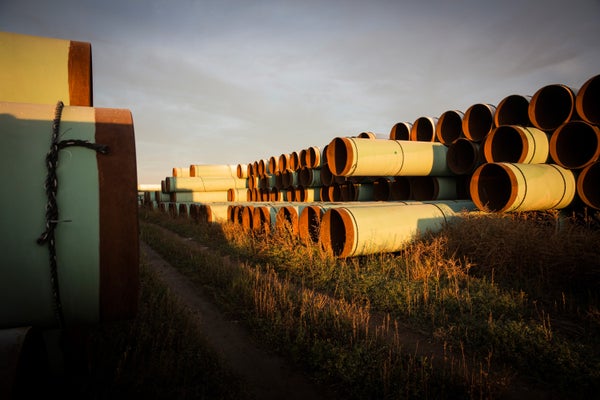
LINCOLN, Nebraska/WASHINGTON (Reuters) - Nebraska regulators voted on Monday to approve TransCanada Corp’s Keystone XL pipeline route through the state, lifting the last big regulatory obstacle for the long-delayed project that U.S. President Donald Trump wants built.

The 3-2 decision by the Nebraska Public Service Commission helps clear the way for the proposed 1,179-mile (1,897-km) pipeline linking Canada's Alberta oil sands to U.S. refineries, but is likely to be challenged in court by the project's opponents who say it poses an environmental risk.

Trump, a Republican, has made Keystone XL’s success a plank in his effort to boost the U.S. energy industry. Environmentalists, meanwhile, have made the project a symbol of their broader fight against fossil fuels and global warming.


On supporting science journalism

If you're enjoying this article, consider supporting our award-winning journalism by subscribing. By purchasing a subscription you are helping to ensure the future of impactful stories about the discoveries and ideas shaping our world today.


The proposed line has been a lightning rod of controversy since it was first advocated nearly a decade ago. The administration of former President Barack Obama, a Democrat, considered the project for years before rejecting it in 2015 on environmental grounds.

Trump swiftly reversed that decision after coming into office this year, handing TransCanada a federal permit for the pipeline in March and arguing the project will lower fuel prices, boost national security, and bring jobs.

That decision placed the pipeline's fate into the hands of the obscure regulatory body in Nebraska, the only state that had yet to approve the pipeline’s route.

Subscribe to Support Independent Journalism

Great science journalism requires human expertise, time, effort and creativity. And it costs money. That’s why I and the journalists here at Scientific American hope you’ll join our community.

When you subscribe, you are supporting staff and freelance journalists who are passionate about telling science stories that are true, important and compelling. Our editors and reporters are often experts in their fields, which means they understand the nuances of big discoveries and can untangle the breakthroughs from the hype. With a subscription, you are also supporting rigorous fact-checking to ensure the words we publish are precise and accurate. And you’re supporting original illustrations, graphics and photos that bring you closer to an advanced laboratory, an ice sheet in Antarctica or a space mission in orbit. You’re helping us craft other types of high-quality journalism as well: Our newsletters are carefully written, edited and curated by staffers you have or will come to know and love. Our Science Quickly podcast is based on original reporting, collaboration with editors and scientists and exacting production.

Subscriptions keep this engine running so we can continue to deliver thoughtful, rigorous and independent science journalism to you. In an era of viral misinformation, this work is crucial. If you value what we do, I hope you’ll consider joining us as a subscriber

Thank you,

Jeanna Bryner, Editor in Chief, Scientific American

Subscribe