Neighborhood Wealth Dramatically Impacts Home Greenhouse Gas Emissions

A detailed, nationwide analysis could set the stage for cities to tailor emissions-reducing policies

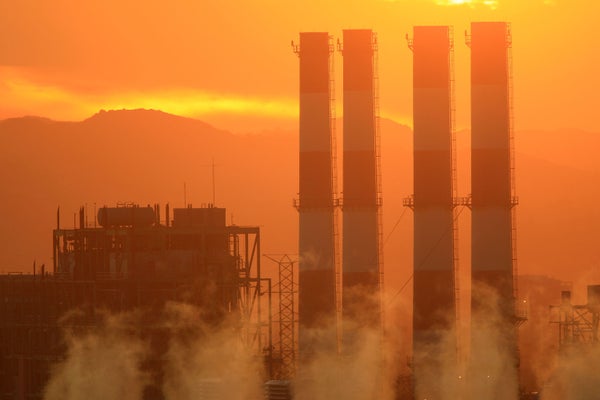
The San Fernando Valley Generating Station is a gas-powered power station located in Sun Valley, Los Angeles, that provides electricity to the city.

Join Our Community of Science Lovers!

If U.S. home energy consumption were a country, it would rank as the world's sixth-largest greenhouse gas emitter. To bring housing emissions in line with international goals to limit global warming, planners must sift through variables such as local climate, building age and size, and occupant income.

A recent study in the Proceedings of the National Academy of Sciences USA provides a new nationwide analysis evaluating these factors. The researchers fed detailed building data from 93 million homes (gleaned from a database of U.S. tax assessor records) into computer models that accounted for local fuel sources to estimate home emissions.
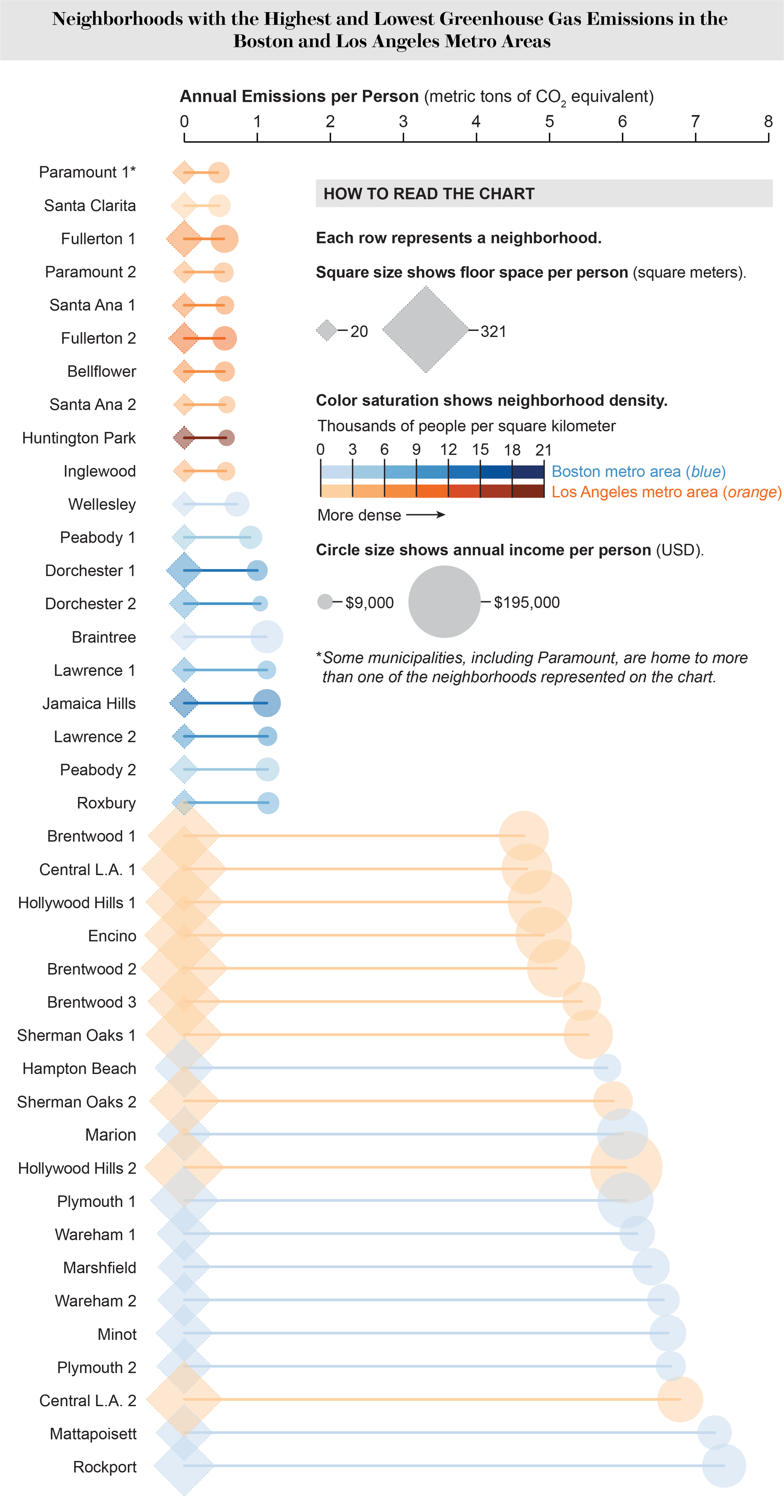
Credit: Amanda Montañez;  Source: The Carbon Footprint of Household Energy Use in the United States,” by Benjamin Goldstein et al., in Proceedings of the National Academy of Sciences USA, Vol. 117, No. 32; August 11, 2020


On supporting science journalism

If you're enjoying this article, consider supporting our award-winning journalism by subscribing. By purchasing a subscription you are helping to ensure the future of impactful stories about the discoveries and ideas shaping our world today.


One clear result was that wealthier people's homes in America tended to be larger and produce about 25 percent more emissions than those of low-income people. This relation held when the researchers dug down to compare neighborhoods within very different cities such as Los Angeles and Boston; in L.A., for instance, some affluent neighborhoods had emissions 15 times higher than nearby low-income areas.

Study co-author Benjamin Goldstein, a researcher at the University of Michigan, was surprised by another finding: dense apartment complexes are not essential to meet emissions goals. The data suggest single-family housing on small lots in certain areas, such as some in Los Angeles, could also reach international targets as carbon-free energy sources become more common. “Not everything needs to look like Brooklyn or Manhattan to be low energy,” he says.

Anu Ramaswami, a Princeton University environmental engineer, who was not involved with the study, cautions that its emissions-estimating models may not capture efficiency measures taken by some homeowners. But she says the research could set an example for municipality-level analyses. For example, such studies could help officials determine how to tailor specific local building policies to best reduce emissions, such as by encouraging smaller lot sizes or alternatives to heating oil.

Andrea Thompson is senior desk editor for life science at Scientific American, covering the environment, energy and earth sciences. She has been covering these issues for nearly two decades. Prior to joining Scientific American, she was a senior writer covering climate science at Climate Central and a reporter and editor at Live Science, where she primarily covered earth science and the environment. She has moderated panels, including as part of the United Nations Sustainable Development Media Zone, and appeared in radio and television interviews on major networks. She holds a graduate degree in science, health and environmental reporting from New York University, as well as a B.S. and an M.S. in atmospheric chemistry from the Georgia Institute of Technology. Follow Thompson on Bluesky @andreatweather.bsky.social

More by Andrea Thompson
Scientific American Magazine Vol 323 Issue 5This article was published with the title “Gas Houses” in Scientific American Magazine Vol. 323 No. 5 (), p. 20
doi:10.1038/scientificamerican1120-20

It’s Time to Stand Up for Science

If you enjoyed this article, I’d like to ask for your support. Scientific American has served as an advocate for science and industry for 180 years, and right now may be the most critical moment in that two-century history.

I’ve been a Scientific American subscriber since I was 12 years old, and it helped shape the way I look at the world. SciAm always educates and delights me, and inspires a sense of awe for our vast, beautiful universe. I hope it does that for you, too.

If you subscribe to Scientific American, you help ensure that our coverage is centered on meaningful research and discovery; that we have the resources to report on the decisions that threaten labs across the U.S.; and that we support both budding and working scientists at a time when the value of science itself too often goes unrecognized.

In return, you get essential news, captivating podcasts, brilliant infographics, can't-miss newsletters, must-watch videos, challenging games, and the science world's best writing and reporting. You can even gift someone a subscription.

There has never been a more important time for us to stand up and show why science matters. I hope you’ll support us in that mission.

Thank you,

David M. Ewalt, Editor in Chief, Scientific American

Subscribe