
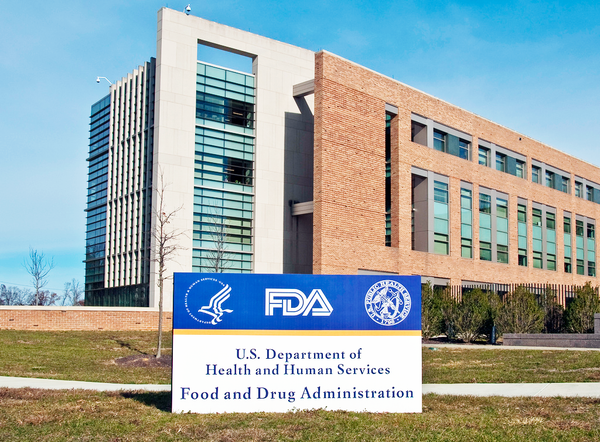
The Trump administration on Tuesday announced it would name Ned Sharpless, the director of the National Cancer Institute, the acting commissioner of the Food and Drug Administration next month.
The announcement came just a week after the current commissioner, Scott Gottlieb, announced he plans to resign in early April.
Health secretary Alex Azar confirmed the announcement at a hearing before the House Energy and Commerce health subcommittee. The news was first reported by Fox Business Network.
On supporting science journalism
If you're enjoying this article, consider supporting our award-winning journalism by subscribing. By purchasing a subscription you are helping to ensure the future of impactful stories about the discoveries and ideas shaping our world today.
Sharpless, a physician-scientist, ran the Lineberger Comprehensive Cancer Center at the University of North Carolina before taking over the NCI in October 2017.
“Dr. Sharpless’ deep scientific background and expertise will make him a strong leader for FDA,” Azar said in a statement. “There will be no let-up in the agency’s focus, from ongoing efforts on drug approvals and combating the opioid crisis to modernizing food safety and addressing the rapid rise in youth use of e-cigarettes.”
Sharpless was an enthusiastic supporter of Gottlieb’s aggressive push to increase tobacco and e-cigarette regulations.
While it remains unclear whether Sharpless will lead the FDA in a long-term capacity, he was seen as a likely pick to replace Gottlieb. Sharpless is already well acquainted with the agency, Gottlieb said in a staff memo the FDA provided to STAT.
“In fact, he plays on a weekly basketball team with some of our medical review staff,” Gottlieb wrote.
Sharpless is also familiar with the biotechnology industry and the drug-development process. He has co-founded two early-stage biotech companies: G1 Therapeutics, a developer of cancer drugs that raised $108.6 million in a 2017 initial public offering, and HealthSpan Diagnostics, a developer of blood tests.
“One of the things that made me appealing to the White House was that in addition to working in research and as a cancer center director, I’d had some work in the commercialization of ideas, from a basic science lab into a Phase 2 trial asset,” Sharpless told STAT in a 2018 interview, shortly after taking over NCI.
Even from his post within the National Institutes of Health, Sharpless spoke often about how his agency could work with the FDA—and how, at NCI, his powers to better regulate and improve cancer care were limited.
He has expressed a longtime interest in using artificial intelligence, including IBM Watson and its cancer care tool, to improve treatments—recognizing that the technology is limited. “It’s early days for the National Cancer Institute in this area,” he said last year, “and most of the regulatory issues are really for the FDA to tackle.”
Douglas Lowy, NCI’s deputy director, will serve as acting director of the cancer research institute while Sharpless serves as acting director of the FDA.
Sharon Begley contributed reporting.
Republished with permission from STAT. This article originally appeared on March 12, 2019