
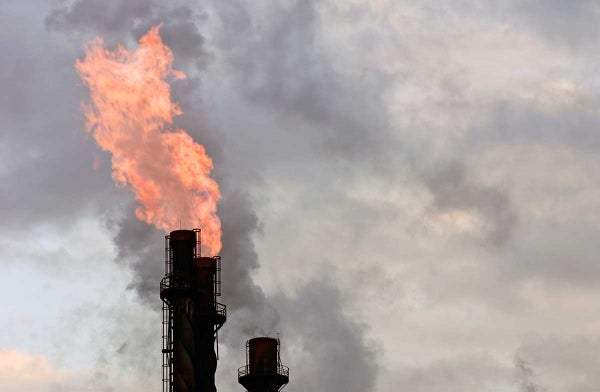
The Obama administration on Friday proposed new rules that would lead to a crackdown on oil and gas wells that vent or flare methane into the atmosphere on public and tribal lands.
Methane is about 35 times as potent as carbon dioxide as a greenhouse gas driving climate change over the span of a century, and it’s the chief component of natural gas produced in the U.S. Oil and gas companies flared or vented about 375 billion cubic feet of natural gas between 2009 and 2014, enough to supply more than 5 million homes with gas.
“If we’re wasting that much energy, we’re not operating very efficiently,” Janice Schneider, the Interior Department’s assistant secretary for land and minerals management, said in a news conference Friday.
On supporting science journalism
If you're enjoying this article, consider supporting our award-winning journalism by subscribing. By purchasing a subscription you are helping to ensure the future of impactful stories about the discoveries and ideas shaping our world today.
The rules proposed by the U.S. Bureau of Land Management are meant to reduce the amount of natural gas that is vented or flared and lower its impact on the climate and air quality.
Most of the U.S. natural gas supply comes from private lands, but about 11 percent comes from public lands. Energy companies operating on both types of land flare as much as a third of the gas they produce. Oil wells sometimes vent and flare gas because the infrastructure doesn’t exist to capture it. Other times, wells leak from valves and other places, and the leaks are often not stopped for extended periods of time.
There is currently no limit to how much gas energy companies operating on public lands are allowed to flare. The rules proposed Friday would limit flaring to 1.8 million cubic feet of gas per month per well, affecting about 16 percent of all oil and gas wells operating on federal lands.
The rules would be phased in over three years and would capture and save about 56 billion cubic feet of natural gas from wells on public lands each year—enough for about 760,000 homes, BLM officials said.
Energy companies will also be required to swap out old leaky equipment and use infrared cameras to detect gas escaping from their wells at least twice annually. “Infrared cameras allow you to see leaks in real time,” BLM Director Neil Kornze said.
Companies will also be barred from venting gas directly into the atmosphere. “They’d need to limit venting from storage tanks and minimize gas losses when removing liquids from wells,” Kornze said.
The public has 60 days to comment on the proposed rules before they are finalized later this year.
This article is reproduced with permission from Climate Central. The article was first published on January 22, 2016.