New Views of Our Mesmerizing, Maddening Minds

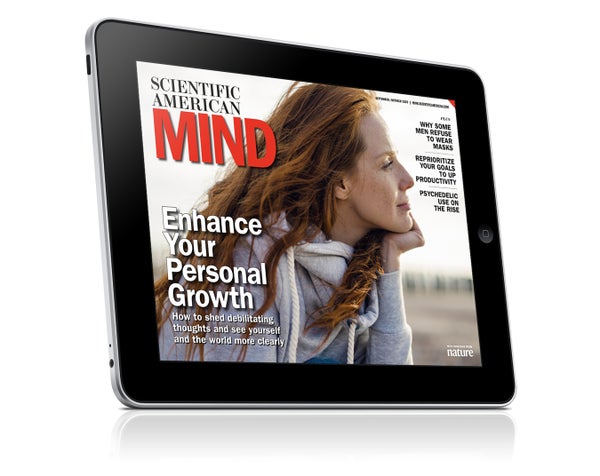
Scientific American MIND September October 2020

Join Our Community of Science Lovers!

It’s one of my favorite events in the science world: the annual Art of Neuroscience contest held by the Netherlands Institute for Neuroscience. Now in its 10th year, the competition looks a lot different than it did even five years ago. Yes, many entries still show off the vivid and fantastical microscopic images of the brain stained in rainbow colors. But thanks to more sophisticated technology, more submissions each year use interactive digital features to create immersive experiences for the viewer. When these types of installations first began appearing in the contest, I bristled a bit (though I am not now proud to admit it). I love the mesmerizing effect of using fluorescent protein tags that illuminate neural cells, for example, or the cilia of the inner ear, which made up the bulk of entries years ago. These images are quite like modern art you’d see in a museum. But just as the brain is more than a corporeal lump of flesh, so the art of neurology is more than a static image. The new generation of brain science art engages the viewers’ own brains as part of the experience—and sometimes in a full sensory immersion, as you can see in some of the entries we’ve featured in this issue (see “The Beautiful Things Inside Your Head: Winners of the 10th Annual Art of Neuroscience Contest”).

In this issue’s cover story, social psychologist Scott Barry Kaufman examines some of the debilitating tendencies of those with a victim mindset, and he offers a powerful new paradigm for how to shift into a personal growth mode and get the most out of your life (see “Unraveling the Mindset of Victimhood”). Our heads are filled with beautiful and strange things, whether one or the other depends on how you look at them.

Andrea Gawrylewski is chief newsletter editor at Scientific American. She writes the daily Today in Science newsletter and oversees all other newsletters at the magazine. In addition, she manages all special editions and in the past was the editor for Scientific American Mind, Scientific American Space & Physics and Scientific American Health & Medicine. Gawrylewski got her start in journalism at the Scientist magazine, where she was a features writer and editor for "hot" research papers in the life sciences. She spent more than six years in educational publishing, editing books for higher education in biology, environmental science and nutrition. She holds a master's degree in earth science and a master's degree in journalism, both from Columbia University, home of the Pulitzer Prize.

More by Andrea Gawrylewski
SA Mind Vol 31 Issue 5This article was published with the title “New Views of our Mesmerizing, Maddening Minds” in SA Mind Vol. 31 No. 5 (), p. 2
doi:10.1038/scientificamericanmind0920-2

It’s Time to Stand Up for Science

If you enjoyed this article, I’d like to ask for your support. Scientific American has served as an advocate for science and industry for 180 years, and right now may be the most critical moment in that two-century history.

I’ve been a Scientific American subscriber since I was 12 years old, and it helped shape the way I look at the world. SciAm always educates and delights me, and inspires a sense of awe for our vast, beautiful universe. I hope it does that for you, too.

If you subscribe to Scientific American, you help ensure that our coverage is centered on meaningful research and discovery; that we have the resources to report on the decisions that threaten labs across the U.S.; and that we support both budding and working scientists at a time when the value of science itself too often goes unrecognized.

In return, you get essential news, captivating podcasts, brilliant infographics, can't-miss newsletters, must-watch videos, challenging games, and the science world's best writing and reporting. You can even gift someone a subscription.

There has never been a more important time for us to stand up and show why science matters. I hope you’ll support us in that mission.

Thank you,

David M. Ewalt, Editor in Chief, Scientific American

Subscribe