
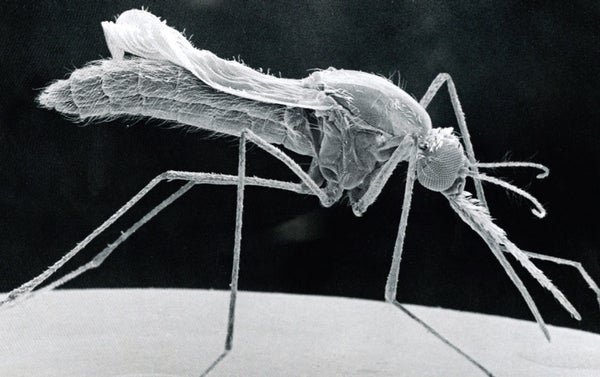
Mosquitoes are not just a nuisance—they spread devastating diseases, including malaria and Zika virus, which have triggered global health crises. In 2015 alone, malaria struck about 212 million people and killed an estimated 429,000, most of them in sub-Saharan Africa.
Wealthy nations such as the U.S. have effective mosquito-control measures in place, but many developing countries cannot afford them. “Right now we're limited in the number of ways we have to control mosquitoes,” says Edmund Norris, an entomologist at Iowa State University. “We need to be developing new methods.”
ISCA Technologies in Riverside, Calif., is aiming to do just that. The company says it has created three simple, inexpensive ways to target malaria-carrying mosquitoes with compounds called semiochemicals—pheromones or other substances that organisms secrete to influence others’ behavior. ISCA's cocktails of plant- and animal-derived semiochemicals lure in the pests, then kill them with insecticides. This method targets mosquitoes more efficiently while reducing the need to spray large amounts of insecticide into the environment, ISCA CEO Agenor Mafra-Neto says.
On supporting science journalism
If you're enjoying this article, consider supporting our award-winning journalism by subscribing. By purchasing a subscription you are helping to ensure the future of impactful stories about the discoveries and ideas shaping our world today.
Others agree. “This sort of technique of using odors is an exciting technology and is really quite promising,” says Chelci Squires, a research entomologist at the London School of Hygiene & Tropical Medicine. (Like Norris, Squires is unaffiliated with ISCA.) “There are lots of issues we still need to consider, though,” she notes—such as the possibility of mosquitoes adapting their behavior to avoid these semiochemicals.
ISCA has been conducting lab tests and field trials in Tanzania, Brazil and the U.S. It hopes these methods can one day help to combat diseases such as dengue, West Nile virus and Zika.
TROJAN COW
ISCA's “signature blend” of semiochemicals mimics human odor—which, unsurprisingly, mosquitoes adore. The faux human perfume can be poured onto cattle or other livestock, hence the reason ISCA named it “Trojan Cow.” Mosquitoes, enticed by the scent, feed on the animal decoys instead of people. When the livestock are also dosed with chemicals toxic to mosquitoes—such as a typical deworming medication—the bloodsuckers die.
AN INTOXICATING SCENT
This mix of compounds includes a pheromone that draws in adult females, as well as an attractant that ensnares their larvae. It is sprayed on potential breeding sites before a rainfall. When it comes in contact with water, it releases the alluring pheromones, duping females into laying their eggs in the treated areas. The larvae hatch and eat the attractant, which includes a live bacterium called Bacillus thuringiensis israelensis. These microbes kill mosquito larvae but leave other insects such as bees or butterflies unharmed.
A SWEET ENDING
Disease-carrying mosquitoes may relish blood, but they also need sugar to survive. ISCA's scientists searched a collection of semiochemicals derived from plant and floral sources to develop a mixture that smells like nectar. The company envisions this concoction being sprayed around the eaves of houses or near a community's walls or fences, along with a pesticide. Mosquitoes would visit these sweet-smelling traps for a meal—and meet a sugary death.