
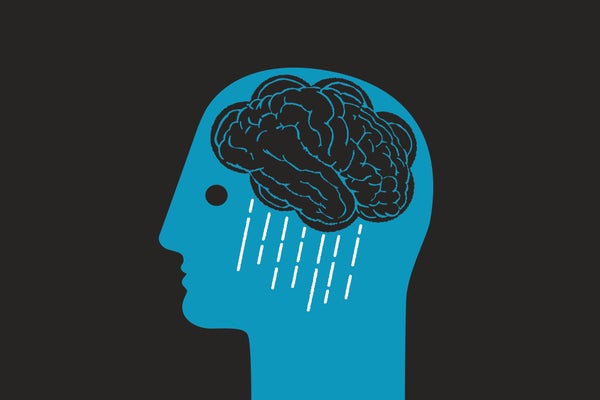
We all like to think that being kind, responsible, and fair will lead to a happy life. But what if we’re wrong? What if nice guys really do finish last? A new study published in Nature Human Behavior suggests that those who value economic equity, at their brain’s core, are more likely to be depressed. Those who prefer everything for themselves tend to be happier.
According to the model of “social value orientation,” humans can be placed into three rough categories, based on their reactions to economic inequity. 60% of people are pro-socials, meaning they prefer resources to be distributed equally among everyone. 30% are individualists, meaning they are primarily concerned with maximizing their own resources. Roughly 10% are competitive; to them, the most important outcome is that they have more than other people.
In 2010, Dr. Masahiko Haruno suggested in Nature Neuroscience that primal brain structures like the amygdala “lie at the core of prosocial orientation.” His research group found that, when exposed to economic inequity, prosocials have strong activation of the amygdala, an evolutionally ancient region of the brain associated with automatic feelings of stress. In a simulation where others received more money than they received, the pro-social amygdalae were activated. When they received more money than others in the simulation, they had amygdala activation again, suggesting automatic feelings of stress or guilt. The individualists, on the other hand, only had strong amygdala activation when they were the victims of the inequity. The individualist amygdala was relatively unfazed when the individualist unfairly got more money than another person. Both groups had amygdalae that were sensitive to being victims, but the prosocials were uniquely sensitive to economic inequity that benefitted them financially. They had guilty amygdalae.
On supporting science journalism
If you're enjoying this article, consider supporting our award-winning journalism by subscribing. By purchasing a subscription you are helping to ensure the future of impactful stories about the discoveries and ideas shaping our world today.
In a new study published in Nature Human Behavior this month, Dr. Haruno’s group took on the question of whether this pro-social pattern of brain activation correlated with longer-term clinical symptoms of depression. They examined the brains of prosocials and individualists using functional magnetic resonance imaging, an imaging technique that allows neuroscientists to see which areas of the brain are activated during specific situations.
As expected, the prosocials had high amygdala activity when exposed to situations in which money was unequally distributed. This was true whether they received more money than others or others received more money than they did. Again, the individualists only had increased amygdala activation when others received more money. An additional finding in this study was that the hippocampus, another primitive brain region involved with automatic stress responses, also showed a different pattern of activity between pro-socials and individualists.
To see if these patterns of brain activity were associated with depression, the researchers used a common depression questionnaire called the Beck Depression Inventory. The Beck measures symptoms of clinical depression within the past two weeks of taking the survey. Haruno’s group found that having a prosocial pattern of brain activation was associated with more depression. This was also true when they followed up with participants one year later. Psychiatrists have long suggested that certain personality characteristics, including extreme empathy and a propensity toward feeling guilt, are associated with developing depression. The study showed that this sensitivity may lie in the deepest, most primal, and most automatic parts of the brain.
Is all hope lost for the pro-socials? Dr. Mauricio Delgado, a neuroscientist at Rutgers University, says no. Although the average pro-social may have a sensitive amygdala (and hippocampus, the other primal stress related brain region in the study), there are plenty of other higher-order brain regions involved in depression, including the prefrontal cortex, a brain region associated with regulation of these automatic feelings, Delgado says. Both he and the authors of the study point out that pro-socials can take advantage of psychotherapy, including cognitive behavioral therapy, to teach them to have better control over their primal responses to inequity. The more they can use the pre-frontal cortex to inhibit amygdala-driven stress, the less likely they may be to become depressed.
It is also important to note that participants in this study were between eighteen and twenty-six. Researchers have shown that the prefrontal cortex does not fully mature until around age twenty-six. Ongoing research by Dr. Haruno is exploring if these findings apply to older adults with fully developed prefrontal cortices. The hope is that more fully developed pre-frontal cortices protect older adults from inequity-driven depression.
Overall, the new findings are slightly disheartening for the pro-socials, but they can also be seen as an opportunity. Pro-socials are prone to experiencing guilt and stress when faced with economic inequity, and this seems to be wired into some of the deepest, most automatic structures of the brain. But by training higher-level brain processes like the pre-frontal cortex, pro-socials can learn to control these emotions and fight depression. Through psychotherapy, one can likely have it all: a core sensitivity to inequity that can drive kind behavior, and the strength to keep these emotions in check to fight depression. The prosocials may need to do more work to fight off depression, but I—and I’m sure all the other prosocials—will be rooting for them.