
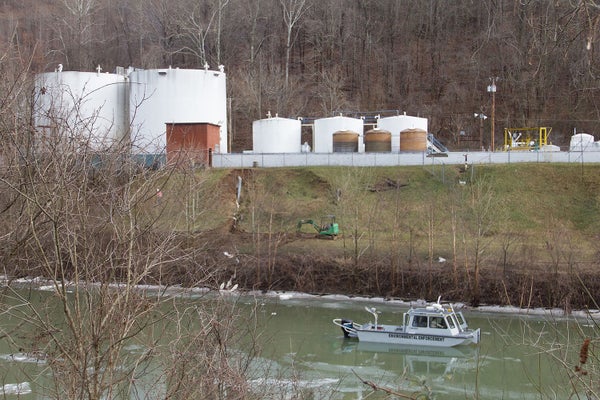

The January 2014 chemical spill in West Virginia that resulted in a large quantity of (4-methylcyclohexyl)methanol (MCHM) and stripped polyglycol ethers (PPH) contaminating local water supplies is unlikely to have harmed residents. That is the conclusion of a final report from the US National Toxicology Program (NTP), released earlier this month.
‘Most of the spilled chemicals had no effect in the studies that were performed,’ the NTP found. In tests the chemicals were only linked with harmful effects when they occurred at levels considerably higher than either the drinking water screening levels for MCHM and PPH recommended by the US Centers for Disease Control (CDC) or the estimated levels found in contaminated drinking water. Negative health effects were not seen at or below the 1 part per million that the CDC recommended as a drinking water screening level for MCHM.
However, the NTP said rat prenatal developmental toxicity research does show that rat foetuses were lower weight due to MCHM exposure. This finding led the West Virginia Department of Health and Human Resources to analyse whether there had been any the prevalence of human children with low birth weights born during the period of the chemical spill in the nine affected counties. This recent investigation found no meaningful differences in birth weights as a result of the chemical spill.
On supporting science journalism
If you're enjoying this article, consider supporting our award-winning journalism by subscribing. By purchasing a subscription you are helping to ensure the future of impactful stories about the discoveries and ideas shaping our world today.
A separate study by researchers at Colorado State University and Purdue University indicates that exposure to MCHM following the West Virginia chemical spill from a tank at a Freedom Industries’ storage site primarily came from showering and flushing out taps and toilets. The residents were advised to flush out their water systems which would have exposed them to air contaminated with these chemicals.
This article is reproduced with permission from Chemistry World. The article was first published on July 22, 2016.