
Novartis’ groundbreaking CAR-T cancer therapy is one big step closer to reaching patients.
A panel of outside experts convened by the FDA voted 10-0 Wednesday to recommend the approval of Novartis’ CAR-T therapy, called CTL019, for the treatment of children and young adults with advanced leukemia. The vote marks a pivotal milestone for this class of experimental treatment. The FDA is expected to make a final decision on approval by Oct. 3.
“I think this is most exciting thing I’ve seen in my lifetime,” said Dr. Tim Cripe, an oncologist with Nationwide Children’s Hospital on Columbus, Ohio and an expert who weighed in on CTL019 at Wednesday’s FDA panel.
On supporting science journalism
If you're enjoying this article, consider supporting our award-winning journalism by subscribing. By purchasing a subscription you are helping to ensure the future of impactful stories about the discoveries and ideas shaping our world today.
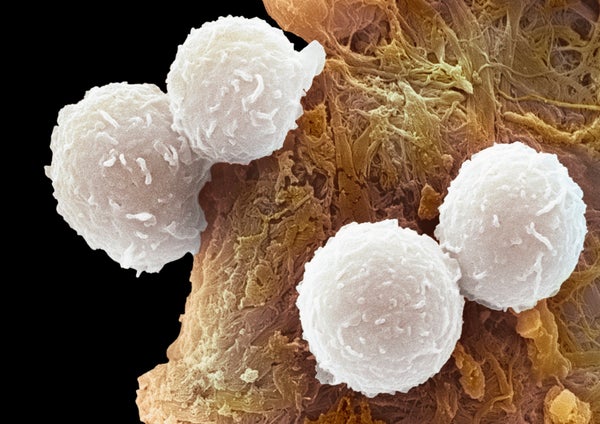
CTL019 is a customized treatment made by harvesting patients’ white blood cells and rewiring them to home in on tumors. It’s the first CAR-T therapy to come before the FDA, leading a pack of novel treatments that promise to change the standard of care for certain aggressive blood cancers.
The FDA is also reviewing a CAR-T from Kite Pharma for the treatment of adults with advanced and aggressive lymphoma. An approval decision for the Kite CAR-T is expected on Nov. 29.
Wednesday’s FDA advisory panel took no issue with CTL019’s positive effects on patients with acute lymphoblastic leukemia that has persisted despite prior treatment. In a clinical trial, the treatment left 83 percent of participants cancer-free after three months, results the independent experts hailed as a major advance for patients with few other options.
On the safety side, the panelists delved into the possible risks of injecting genetically modified cells into patients, including the potential for deadly viral infections, brain toxicity, and, paradoxically, the growth of new tumors brought about by CAR-T cells years after treatment.
Novartis has promised to keep tabs on patient safety for up to 15 years after they receive CTL019, and panelists said none of the treatment’s potential risks should stand in the way of FDA approval.
“I don’t think any of these considerations would be show-stoppers for the outstanding clinical results that have been obtained to date,” said Dr. Larry Kwak, an oncologist at City of Hope National Medical Center in California.
Unlike well-understood pills and commonly injected biotech drugs, CAR-T presents a radical new paradigm for the FDA. Each dose is custom-tailored for an individual patient, requiring a complex process in which human cells must be safely ferried across the country, reliably augmented, and soundly returned.
Novartis believes it’s up to the task. If CTL019 is approved, the Swiss pharmaceutical giant plans to dole it out from about 30 preapproved sites, each trained in the multi-step process of harvesting cells, handling the product, and treating patients for the feverish and often life-threatening immune response that usually accompanies CAR-T therapy.
What remains unclear is just how lucrative a business opportunity CTL019 presents. There are about 3,100 new cases of ALL each year, but roughly 70 percent can be pushed into remission by standard therapy. That could leave just a few hundred patients who might be eligible for Novartis’ therapy, casting doubt on whether the company can get an outsize return on what will be a substantial manufacturing investment.
But CAR-T’s potential goes far beyond leukemia. Novartis is developing CTL019 for use in lymphoma, and its pipeline includes other CAR-T therapies targeting an array of blood cancers. Kite is similarly ambitious with its work in CAR-T, and so too is Juno Therapeutics. Each is hoping to build an expansive business by hotwiring white blood cells to treat cancer.
And Wednesday’s victory for Novartis, however incremental, buoyed the whole CAR-T field.
“Today is not about business or competition,” Kite CEO Dr. Arie Belldegrun wrote in a blog post before the vote. “Today, we are not rivals. Today is about advancing an exciting technology that has the potential to transform cancer treatment.”
Republished with permission from STAT. This article originally appeared on July 12, 2017