
The Duwamish River, which winds through Seattle, contains a lot of unpleasant stuff. In one industrially contaminated stretch, which has been designated a Superfund site, levels of many pollutants exceed state health standards. The compounds, which include notorious chemicals such as polychlorinated biphenyls (PCBs) and polycyclic aromatic hydrocarbons (PAHs), settle in river sediments and make fish and shellfish unsafe to eat.
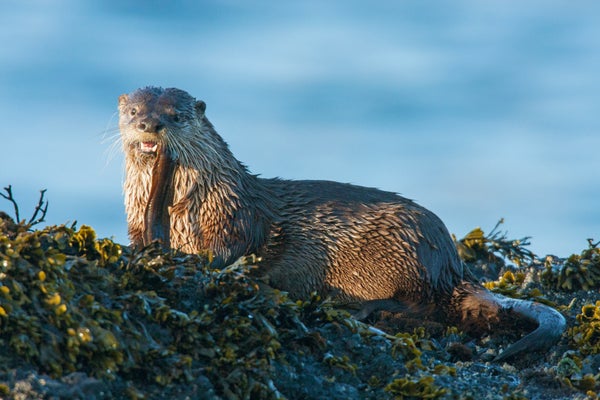
Swimming amidst this pollution is a population of river otters. Now researchers are proposing to use otter poop to help monitor a 17-year-long plan to clean the river, recently approved by the U.S. Environmental Protection Agency. Biologist Michelle Wainstein, from Seattle’s Woodland Park Zoo, says the charismatic mammals are top predators who mainly eat fish and crabs but also dine on frogs, birds and small mammals. All these river denizens take in pollutants and pass them along to otters. The otters, in turn, use communal latrines on shore to defecate, making it easy and noninvasive to sample their scat for pollutants. “They like to get together and have poop parties,” Wainstein says.
This kind of sampling can give scientists a much better idea of what is getting into a body than simply analyzing water or river sediment. Picking up scat to determine pollutant levels also is preferable to trapping otters, because handling the creatures “can be extremely stressful for animals,” says Elizabeth Peterson, a postdoctoral researcher at Colorado State University–Pueblo. And cleaning the river is important. In mammals including humans PCBs disrupt reproduction and the endocrine and neurological systems, and are carcinogens. Many PAHs are also probable human carcinogens. In the otters, scientists suspect PCBs may harm reproduction but do not yet have direct evidence.
On supporting science journalism
If you're enjoying this article, consider supporting our award-winning journalism by subscribing. By purchasing a subscription you are helping to ensure the future of impactful stories about the discoveries and ideas shaping our world today.
The idea of using otters as pollution monitors was demonstrated by researchers in Europe in the 1990s, and more recently by ecotoxicologist John Elliott of Environment and Climate Change Canada and colleagues on Vancouver Island, off the coast of British Columbia. They found the scat of river otters in the harbor of the island’s major city had high PCB levels, linked to pollution in harbor sediments. Wainstein thought that if there were local otter populations on different sections of the Duwamish, the animals could help scientists assess the degree of pollution in each section. She collected otter scat from latrines from eight sections along 55 miles of the Duwamish and its parent river, the Green, and collaborators at the National Oceanic and Atmospheric Administration’s Northwest Fisheries Science Center and the Washington State Department of Ecology analyzed it for PCBs and PAHs. They found PCB levels in otter scat spiked in the area of the Superfund site, a five-mile section of the river called the Lower Duwamish Waterway. PCB levels were much lower in upstream reaches with less industry exposure; PAHs showed similar patterns. Several genetic samples taken from the scat also support the idea that the animals stayed within localized river reaches, says Wainstein, who presented the research at the Salish Sea Ecosystem Conference in Seattle in April.
“River otters are a really promising animal to use as a biomonitor of ecosystem health,” says Kristin Hultgren, a biologist at Seattle University who has studied the effect of lead on crustaceans in the Duwamish. “I think it’s very important to establish these baseline levels of contaminants in the animals now, if we want to assess how successful these cleanups will be,” she says. She notes it is important to collect more genetic data to verify the otters’ home ranges and validate the approach. Wainstein’s team is now analyzing more scat samples collected in the past year for such information as well as levels of other pollutants, including brominated flame retardants and organochlorine pesticides.
The researchers still do not know what the pollutants are doing to otters, Wainstein says. But through the animals’ scat they hope to learn how well the cleanup effort is working on the entire river ecosystem. “In 10 years, are otters still eating stuff that’s filled with PCBs,” she says, “or are we really preventing it from getting into the food web?”