
Every day in the 1920s an Akita named Hachikō came to a Tokyo train station and waited to greet his owner when he got off the train. Even after the man died suddenly at work one day, Hachikō waited in vain at the station every day for his return, for nearly a decade.
The profound loyalty of pets is only part of the joy they bring to our lives. Humans have kept close quarters with dogs and cats for millennia—they have served us as guard animals and pest control, but most important, they are often our truest companions and purest friends. The latest study on an experimental fox population is demonstrating how quickly dogs may have become domesticated by humans. And the earliest record of a cat companion goes back nearly 10,000 years.
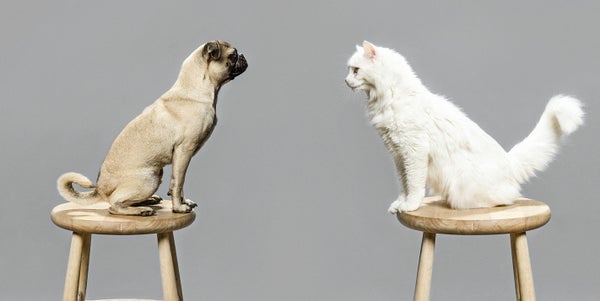
Today roughly two thirds of American households have a pet. I do marvel that I share a home with a small animal—with its walnut-size brain—that follows me about, depends on me and, dare I hope, loves me. This issue is devoted to the most popular pets—dogs and cats—and what science tells us about their brains and their relationships to humans and to each other.
On supporting science journalism
If you're enjoying this article, consider supporting our award-winning journalism by subscribing. By purchasing a subscription you are helping to ensure the future of impactful stories about the discoveries and ideas shaping our world today.
Dogs like Hachikō aren’t the only animals that display remarkably humanlike emotion. Creatures of many species from wolf to cetacean grieve the loss of relatives or close companions, as Barbara J. King discusses. What, precisely, these animals are experiencing in their minds is still unknown, however, and recent research shows that people frequently misinterpret their pets’ feelings.
Pets fill our own emotional need to nurture other living things, making us healthier and happier. In fact, what type of animal you own says a lot about your personality—sorry, rabbit caretakers, but you are our most neurotic readers. Animal care shapes our daily routines and can help us forge new friendships or exercise habits, which we struggle to maintain after the death of our furry companions. Beyond exploring our day-to-day interactions with our pets, new research on canine oncology may soon yield promising results for human cancers.
As Frans B. M. de Waal writes, numerous scientific studies have found that mammals from mice to nonhuman primates display behaviors indicative of empathy—an emotion that appears to be as old as our early mammalian ancestors. This, to me, explains our connection to our domesticated animal friends: without question and without criticism, they seem to accept our human nature and love us anyway.