Outbreak of Mosquito-Borne Disease Halts Blood Donation in Rome

Chikungunya can cause painful body aches 

Join Our Community of Science Lovers!

ROME (Reuters) - Italian health officials have banned residents across half of Rome from donating blood because of an outbreak of the painful, mosquito-borne illness Chikungunya.

At least 17 people in southeastern Rome have been diagnosed with the virus since the end of August, and the local health authority decided to suspend blood donations in the affected areas to prevent accidental transmission.

The ban covers some 1.2 million residents. Anyone who has visited the affected area of the capital since Aug. 25 should not give blood for 28 days.


On supporting science journalism

If you're enjoying this article, consider supporting our award-winning journalism by subscribing. By purchasing a subscription you are helping to ensure the future of impactful stories about the discoveries and ideas shaping our world today.


Chikungunya symptoms include high fever, joint and muscular pain, severe headaches, nausea and a rash. They normally surface within three to seven days after a bite from an infected mosquito and typically dissipate within a week. The virus is not deadly, but there is no vaccine.

The disease is typically found in tropical areas and used to be entirely absent from Italy.

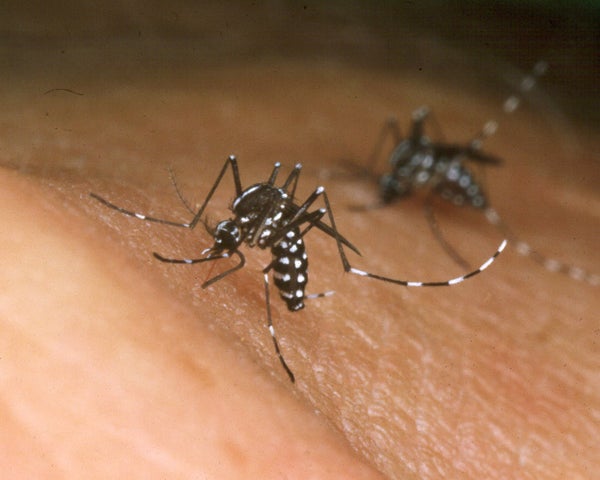
However, a mosquito which transmits Chikungunya, the Tiger Mosquito, first appeared in the country in the 1990s and is now commonplace, and there was an outbreak of the virus around the city of Ravenna in 2007.

It’s Time to Stand Up for Science

If you enjoyed this article, I’d like to ask for your support. Scientific American has served as an advocate for science and industry for 180 years, and right now may be the most critical moment in that two-century history.

I’ve been a Scientific American subscriber since I was 12 years old, and it helped shape the way I look at the world. SciAm always educates and delights me, and inspires a sense of awe for our vast, beautiful universe. I hope it does that for you, too.

If you subscribe to Scientific American, you help ensure that our coverage is centered on meaningful research and discovery; that we have the resources to report on the decisions that threaten labs across the U.S.; and that we support both budding and working scientists at a time when the value of science itself too often goes unrecognized.

In return, you get essential news, captivating podcasts, brilliant infographics, can't-miss newsletters, must-watch videos, challenging games, and the science world's best writing and reporting. You can even gift someone a subscription.

There has never been a more important time for us to stand up and show why science matters. I hope you’ll support us in that mission.

Thank you,

David M. Ewalt, Editor in Chief, Scientific American

Subscribe