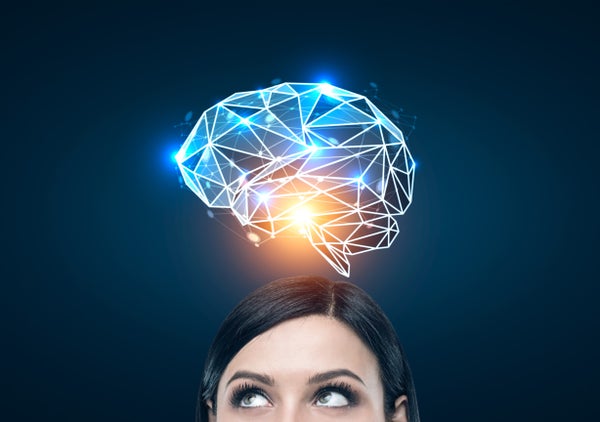
Outsmarting Our Obsession with Smartness

Getty Images

Join Our Community of Science Lovers!


On supporting science journalism

If you're enjoying this article, consider supporting our award-winning journalism by subscribing. By purchasing a subscription you are helping to ensure the future of impactful stories about the discoveries and ideas shaping our world today.


If the nearly 180,000 parenting guides being offered on Amazon are any indication, people are eager to raise good kids. But more important, we want our children to be smart. After all, studies have shown that the more intelligent you are, the more money you’ll make, the further you’ll go in your career, and the better “luck” you’ll have in life. So it’s no wonder that we’re all eager to improve our child’s brainpower (and ours as well). Many research dollars and hours have been spent on how to trigger a cognitive boost and on how to measure it. Yet, as Scott Barry Kaufman asks in these pages, what if we’re looking at this the wrong way? Rather than obsessing over something as fluid and mercurial as raw intelligence, perhaps we should be nurturing overall well-being, combined with a sense of purpose and meaning, in ourselves and in our children. Studies have shown that such factors are linked to longevity, reduced occurrence of heart trouble and stroke, and many other factors (see “When Does Intelligence Peak?”).

Elsewhere in this issue, Catherine L. Caldwell-Harris describes the new data that show that, contrary to older hypotheses, our language can actually influence our visual perception (see “Our Language Affects What We See”). And Corinna Hartmann digs into the evidence for so-called only-child syndrome—are they really more self-focused and spoiled (see “Is Only-Child Syndrome Real?”)? As the eldest child in my own family, I will refrain from commenting on this further, as I have biased opinions. But I hope you enjoy the read!

Andrea Gawrylewski is chief newsletter editor at Scientific American. She writes the daily Today in Science newsletter and oversees all other newsletters at the magazine. In addition, she manages all special editions and in the past was the editor for Scientific American Mind, Scientific American Space & Physics and Scientific American Health & Medicine. Gawrylewski got her start in journalism at the Scientist magazine, where she was a features writer and editor for "hot" research papers in the life sciences. She spent more than six years in educational publishing, editing books for higher education in biology, environmental science and nutrition. She holds a master's degree in earth science and a master's degree in journalism, both from Columbia University, home of the Pulitzer Prize.

More by Andrea Gawrylewski
SA Mind Vol 30 Issue 3This article was published with the title “Outsmarting Our Obsession with Smartness” in SA Mind Vol. 30 No. 3 ()
doi:10.1038/scientificamerican052019-48ycOVrRkbODxkigiyb59X

It’s Time to Stand Up for Science

If you enjoyed this article, I’d like to ask for your support. Scientific American has served as an advocate for science and industry for 180 years, and right now may be the most critical moment in that two-century history.

I’ve been a Scientific American subscriber since I was 12 years old, and it helped shape the way I look at the world. SciAm always educates and delights me, and inspires a sense of awe for our vast, beautiful universe. I hope it does that for you, too.

If you subscribe to Scientific American, you help ensure that our coverage is centered on meaningful research and discovery; that we have the resources to report on the decisions that threaten labs across the U.S.; and that we support both budding and working scientists at a time when the value of science itself too often goes unrecognized.

In return, you get essential news, captivating podcasts, brilliant infographics, can't-miss newsletters, must-watch videos, challenging games, and the science world's best writing and reporting. You can even gift someone a subscription.

There has never been a more important time for us to stand up and show why science matters. I hope you’ll support us in that mission.

Thank you,

David M. Ewalt, Editor in Chief, Scientific American

Subscribe