
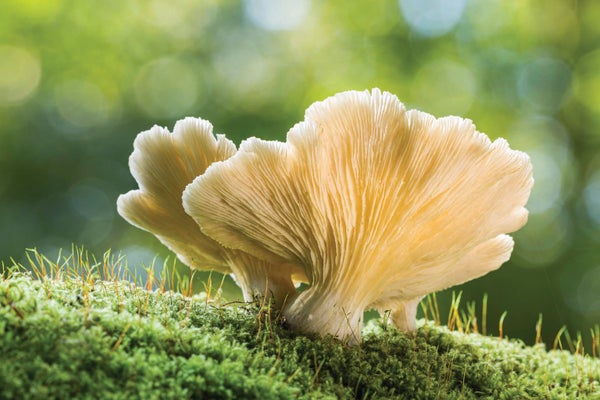
Oyster mushrooms feature in cuisines around the world, but they should be off the menu for hungry worms—which these delicious fungi kill and devour with abandon. Now researchers finally know how they do it.
A study published in Science Advances details how oyster mushrooms use a particular toxin to paralyze and knock off fungus-eating roundworms called nematodes. The fungi, which grow on nutrient-poor rotting wood, then consume the nitrogen-rich worms.
“Nematodes happen to be the most abundant animals these fungi encounter, so I think it's very interesting evolutionarily, this cross-kingdom prey interaction,” says study senior author Yen-Ping Hsueh, a molecular biologist at Academia Sinica in Taiwan.
On supporting science journalism
If you're enjoying this article, consider supporting our award-winning journalism by subscribing. By purchasing a subscription you are helping to ensure the future of impactful stories about the discoveries and ideas shaping our world today.
The study team of geneticists, molecular biologists, biochemists and fungal biologists had previously found that oyster mushrooms exude an unidentified toxin that somehow paralyzes the worms within minutes and causes calcium to flow into their cells, killing them. This mechanism differs from those used by other carnivorous fungi and could be unique to oyster mushrooms.
For their new work, the researchers grew and analyzed samples of the fungi's tissue, finding no noticeable toxin even when they broke it up. They reasoned that whatever was killing the worms must be a volatile compound that evaporates when disturbed. When they damaged the oyster mushroom tissue again and then analyzed the nearby air with gas chromatography–mass spectrometry, they finally found 3-octanone—a nerve gas that turned out to be encapsulated in microscopic, lollipop-shaped structures on the mushroom surface. When nematodes touch the mushrooms, these structures release their gas, disrupting the worms' cell membranes to cause paralysis and death. The worm is then digested via the mycelium, a mushroom's threadlike feeding network.
Before this work, “we didn't really appreciate how many fungi in the wild are defending themselves against nematodes or even using nematodes as food,” says Nick Talbot, a geneticist at Sainsbury Laboratory in Norwich, England, who studies how fungi can harm plants but was not involved in the new research. The study demonstrates “a very novel approach,” he adds. “These organisms are really difficult to work on, and Dr. Hsueh is showing that you can do some really amazing work with them.”