
A century ago the visionary bacteriologist Paul Ehrlich aptly coined that term to describe an immune system attack against a person's own tissues. Ehrlich thought such autoimmunity—another term he coined—was biologically possible yet was somehow kept in check, but the medical community misconstrued his two-sided idea, believing instead that autoimmunity had to be inherently impossible. After all, what wrong turn of evolution would permit even the chance of horrendous, built-in self-destruction?
Slowly, though, a number of mysterious ailments came to be recognized as examples of horror autotoxicus--among them multiple sclerosis, insulin-dependent diabetes (the form that commonly strikes in youth) and rheumatoid arthritis. Investigators learned, too, that these diseases usually stem from the renegade actions of white blood cells known as CD4+ T lymphocytes (so named because they display a molecule called CD4 and mature in the thymus). Normal versions of these cells serve as officers in the immune system's armed forces, responsible for unleashing the system's combat troops against disease-causing microorganisms. But sometimes the cells turn against components of the body.
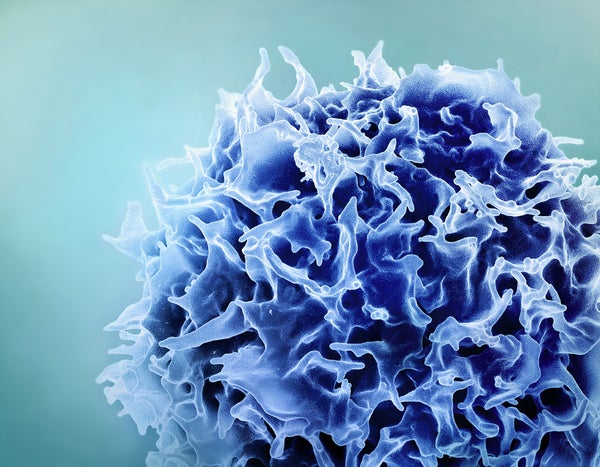
Ehrlich was correct in another way as well. Recent work has identified cells that apparently exist specifically to block aberrant immune behavior. Called regulatory T cells, they are a sub-population of CD4+ T cells, and they are vital for maintaining an immune system in harmony with its host. Increasingly, immunologists are also realizing that these cells do much more than quash autoimmunity; they also influence the immune system’s responses to infectious agents, cancer, organ transplants and pregnancy. We and others are working to understand exactly how these remarkable cells carry out their responsibilities and why they sometimes function imperfectly. The findings should reveal ways to regulate the regulators and thus to depress or enhance immune activity as needed and, in so doing, to better address some of today’s foremost medical challenges.
On supporting science journalism
If you're enjoying this article, consider supporting our award-winning journalism by subscribing. By purchasing a subscription you are helping to ensure the future of impactful stories about the discoveries and ideas shaping our world today.
Imperfect Defenses
Like the immunologists of Ehrlich’s time, many people today would be dismayed to know that no matter how healthy they may be, their bodies harbor potentially destructive immune system cells quite capable of triggering autoimmune disease. Yet this immunological sword of Damocles can be easily demonstrated. If a mouse, for example, is injected with proteins from its own central nervous system, along with an adjuvant (a generalized immune system stimulus), a destructive immune reaction ensues. Much as in multiple sclerosis, T cells launch an attack on the animal’s brain and spinal cord. By varying the source of the injected self-protein, researchers can provoke other auto-immune diseases in laboratory animals—which indicates that potentially harmful immune system cells can mount self-attacks on a wide variety of tissues. The risk appears to hold true in humans, too, because autoreactive immune system cells can be captured readily from the blood of a healthy person. In a test tube, they react strongly to samples of that person’s tissues.
Given such demonstrations of clear and imminent danger, investigators naturally wondered how it is that most animals and humans are untroubled by autoimmune disease. Put an-other way, they wanted to know how the immune system distinguishes threats such as microbes from a person’s own tissues. They found that to achieve self-tolerance—the ability to refrain from attacking one’s own organs—the immune system enlists numerous safeguards. The first defense, at least where T cells are concerned, occurs in the thymus, which lies inconspicuously in front of the heart. In the thymus, immature T cells undergo a strict “education” in which they are programmed to not react strongly (and therefore harmfully) to any bodily tissues. Disobedient cells are destroyed. No system is perfect, though, and in fact a small number of autoaggressive T cells slip through. Escaping into the bloodstream and into lymph vessels, they create the immune system’s potential for unleashing autoimmune disease.
Blood and lymph vessels are where a second line of defense comes into play. This layer of protection against autoimmunity has several facets. Certain tissues, including those of the brain and spinal cord, are concealed from immune cell patrols simply by having a paucity of blood and lymph vessels that penetrate deep into the tissue. Their isolation, however, is not absolute, and at times, such as when the tissues are injured, self-reactive immune cells can find a way in. Additional modes of protection are more proactive. Immune cells showing an inappropriate interest in the body’s own tissues can be targeted for destruction or rendered quiescent by other immune system components.
Among the immune cells that carry out these proactive roles, regulatory T cells may well be the most crucial. The majority, if not all of them, learn their “adult” roles within the thymus, as other T cells do, then go forth and persist through-out the body as a specialized T cell subpopulation.
Discovering the Peacekeepers
Findings hinting at the existence of regulatory T cells date back surprisingly far. In 1969 Yasuaki Nishizuka and Teruyo Sakakura, working at the Aichi Cancer Center Research Institute in Nagoya, Japan, showed that removing the thymus from newborn female mice had a curious outcome: the animals lost their ovaries. At first it was thought that the thymus must secrete some kind of hormone needed for survival of the developing ovaries. Later, though, it turned out that immune system cells invaded the ovaries. The ovarian destruction was therefore an autoimmune disease, which had presumably been unleashed by the animals’ loss of a countervailing regulatory process. If the mice were inoculated with normal T cells, the autoimmune disease was inhibited. T cells, then, could at times police themselves somehow.
In the early 1970s John Penhale of the University of Edinburgh made analogous observations in adult rats, and Richard Gershon of Yale University became the first to propose the existence of a T cell population capable of damping immune responses, including autoaggressive ones. This hypothetical immune system member was christened the suppressor T cell. At the time, though, no researcher was able to actually find one or pinpoint the molecular action by which one immune system cell could restrain another. Consequently, the concept of the suppressor T cell languished along the fringes of mainstream immunology.
Despite the negative atmosphere, some researchers persisted in trying to identify T cells with an ability to prevent autoimmune disease. The basic hope was to discover a telltale molecular feature at the surface of such cells—a “marker” by which suppressor T cells could be distinguished from other cells. Beginning in the mid-1980s, various candidate markers were explored.
In 1995 one of us (Sakaguchi) finally demonstrated that a molecule called CD25 was a reliable marker. When, in studies of mice, he removed CD4+ T cells displaying that molecule, organs such as the thyroid, stomach, gonads, pancreas and salivary glands came under an autoimmune attack characterized by dramatic inflammation: white blood cells swarmed into the organs and damaged them.
In an important confirmatory experiment, T cell populations obtained from normal mice were depleted of their CD4+ CD25+ T cells, which evidently made up only a small proportion (at most, 10 percent) of the overall T cell pool. Then T cells left behind were transferred to mice engineered to lack an immune system of their own. This maneuver caused autoimmune disease. And the more complete the depletion was in the donor animals, the more severe the spectrum of disease be-came in the recipients—with comprehensive depletion often proving to be fatal. Reintroducing CD4+ CD25+ T cells, even in small numbers, conferred normal immunity and protected the animals from these disorders. Experiments conducted wholly in test tubes also produced valuable confirmatory evidence. Perhaps to absolve “suppressor cells” of any lingering stigma, immunologists started to call them CD25+ regulatory T cells, or simply T-regs.
How Do T-regs Work?
To this day, the precise ways in which T-regs suppress autoimmune activity have remained mysterious, making their function a continuing subject of intense inquiry. The cells appear capable of suppressing a wide variety of immune system cells, impeding the cells’ multiplication and also their other activities, such as secretion of cell-to-cell chemical signals (cytokines). And researchers tend to agree that T-regs are activated by direct cell-to-cell contacts. Beyond that, the picture is rather murky.
Recently, however, our laboratory at Kyoto University and, independently, Alexander Rudensky’s group at the University of Washington and Fred Ramsdell’s group at CellTech R&D in Bothell, Wash., found a fresh clue as to how T-regs develop and function. The cells contain a large amount of an intracellular molecule called Foxp3. In fact, the enrichment is greater than has been reported for any other T-reg molecular feature.
Foxp3 is a transcription factor: a molecule that regulates the activity of specific genes, thereby controlling a cell’s production of the protein that each such gene encodes. Be-cause proteins are the main worker molecules in cells, altered production of one or more of them can affect how a cell functions. In the case of Foxp3, the changes it induces in gene activity apparently turn developing T cells into T-regs. Indeed, artificially introducing Foxp3 into otherwise unremarkable T cells provokes a reprogramming, by which the cells acquire all the suppressive abilities of full-fl edged T-regs produced by the thymus. A type of mouse called the Scurfy strain, long known to researchers, has recently been found to have only an inactive, mutant form of the Foxp3 protein, along with a total absence of T-regs. The consequence is an immune system gone haywire, with massive inflammation in numerous organs, leading to the animals’ early death.
Of course, investigators study T-regs in animals such as mice so that the knowledge gained may be applied to humans. So what evidence is there that T-regs are indeed important in humans—or that they exist in us at all?
It turns out that the molecular features characteristic of T-regs in rodents are also characteristic of a subset of T cells in humans. In humans, as in rodents, these cells exhibit the CD25 molecule and have a high content of Foxp3. In addition, the cells are immunosuppressive, at least in a test tube.
Perhaps the most compelling indications that they are vital to human health come from a rare genetic abnormality called IPEX (immune dysregulation, polyendocrinopathy, enteropathy, X-linked syndrome). Arising from mutations in a gene on the X chromosome, IPEX affects male children, who unlike females inherit only one X chromosome and hence have no chance of inheriting a second, normal copy of the gene, which would encode a healthy version of the affected protein. In males the mutation results in autoimmune disease affecting multiple organs, including the thyroid and (as happens in insulin-dependent diabetes) the pancreas, and also in chronic intestinal inflammation (inflammatory bowel disease) and un-controlled allergy (food allergy and severe skin inflammation), all of which can be understood as varied manifestations of the hyperactivity of an immune system unrestrained by T-regs. Death comes in infancy or soon after, with contributing causes ranging from autoimmune diabetes to severe diarrhea. The specific genetic flaw underlying IPEX has recently proved to be mutation in none other than Foxp3. IPEX is therefore the human counterpart of the illness in Scurfy mice.
Beyond Self-Tolerance
The evidence, then, indicates that T-regs do prevent autoimmune disease in humans. But the cells also appear to serve health in other ways, including participating (in some surprising ways) in responses to microbes.
Throughout the 1990s Fiona Powrie and her colleagues at the DNAX Research Institute in Palo Alto, Calif., experimented with transferring T cell populations depleted of T-regs into mice engineered to lack an immune system of their own. In one set of studies, the transfer induced a severe, often fatal form of inflammatory bowel disease. But the aberrant immune activity was not directed primarily at bowel tissue itself.
The bowels of rodents, like those of humans, are home to a vast bacterial population, typically more than a trillion for every gram of intestinal tissue. Although these bacteria are foreign, they are usually far from harmful; indeed, they pro-mote the digestion of food and even displace dangerous bacteria, such as salmonella, that would otherwise try to colonize the intestines. Normally the immune system tolerates the presence of the helpful population. But in Powrie’s mice, it at-tacked. And in doing so, the transplanted immune cells caused collateral damage to the recipient’s gut. Yet transfer of T-regs caused no problems. In fact, if the T-regs were transferred along with the other T cells, they prevented the bowel disease that would otherwise have ensued. Overall, the immune system appeared to be on a hair trigger, prepared to assault gut bacteria and held in check only by T-regs.
A similar hair trigger may affect the immune system’s responses to harmful foreigners. On the one hand, T-regs might rein in an overemphatic response. On the other hand, the reining in might keep an invader from being totally destroyed, enabling it to persist and potentially fl are up again. For example, some findings suggest that failure to clear the stomach of a bacterium called Helicobacter pylori, now known to cause stomach ulcer, stems from blunting by T-regs of the immune system’s weaponry.
Work by David Sacks and his colleagues at the National Institutes of Health has revealed further complexity. It implies that leaving a few survivors among invading organisms may not be entirely a bad thing. The researchers infected mice with a fairly innocuous parasite. Even when the immune system was fully intact, it allowed a small number of parasites to remain, after which reinfection triggered a prompt, efficient response. If the immune system was depleted of its T-regs, however, the parasite was completely purged, but reinfection was dealt with inefficiently, as if the mice had never before encountered the invader. Hence, T-regs appear to contribute to maintaining immunological memory, a process that is crucial for immunity to repeated infection and that also underlies the success of vaccination.
Research hints, too, at a role for T-regs in protecting pregnancies. Every pregnancy unavoidably poses quite a challenge to the mother’s immune defenses. Because the fetus inherits half its genes from the father, it is genetically half-distinct from its mother and thus is in essence an organ transplant. Within the trophoblast, the placental tissue that attaches the fetus to the uterine wall, a number of mechanisms give the fetus some safety from what would amount to transplant rejection. The trophoblast not only presents a physical barrier to would-be attackers in the mother’s blood but also pro-duces immunosuppressive molecules.
The mother’s immune system seems to undergo changes as well. Reports of women in whom an autoimmune disease such as multiple sclerosis abates during pregnancy provide anecdotal evidence that T-regs become more active. Some recent experiments offer more direct support. At the University of Cambridge, Alexander Betz and his colleagues have shown that during pregnancy in mice, maternal T-regs expand in number. Conversely, an experimentally engineered absence of T-regs leads to fetal rejection marked by a massive infiltration of immune cells across the maternal-fetal boundary. It is tempting to speculate that in some women, insufficient T-reg activity may underlie recurrences of spontaneous abortion.
Recruiting the Regulators
In T-regs, nature clearly has crafted a potent means of controlling immune responses. Tapping into this control would make T-regs a potentially powerful therapeutic ally against a wide range of medical disorders. It is still too early to expect to see applications in doctors’ offices, but the available data suggest that delivering T-regs themselves, or perhaps medicines that increase or decrease their activity, could provide novel treatments for a variety of conditions. Indeed, some human trials are under way.
The most obvious application would involve enhancing T-reg activity to fight autoimmune diseases, and drug therapy is being explored in patients with multiple sclerosis and psoriasis, among other conditions. Pumping up T-reg activity might also be useful for treating allergies. The ease with which T-regs can keep immune responses at bay suggests that T-reg-based therapies could hold particular promise for preventing rejection of transplanted organs. The ideal would be for transplant recipients to tolerate grafts as well as they do their own tissues. Also ideal would be a tolerance that endures as a permanent state of affairs, without need for immunosuppressive drugs, which can have many side effects.
The opposite type of T-reg-based therapy would be a selective depletion of T-regs to counter unwanted immunosuppression and, consequently, to strengthen beneficial immune responses. In practice, a partial depletion might be preferred to a complete one, because it should pose less risk of inducing autoimmune disease. Best of all would be removal solely of those T-regs that were specifically blocking a useful immune response. The depletion strategy might be especially advantageous against infectious diseases that the immune system, left to itself, tends to combat inadequately—perhaps tuberculosis or even AIDS.
In addition, T-reg reduction might be advantageous for fighting cancer. Much evidence suggests that circulating immune cells keep a lookout for molecular aberrations that occur as a cell becomes cancerous. To the extent that T-regs impede this surveillance, they might inadvertently help a malignancy take root and grow. In fact, some cancers appear to encourage such help: they secrete molecular signals capable of attracting T-regs and of converting non-T-regs into T-regs. Some findings suggest, for example, that cancer patients have abnormally high numbers of active T-regs both in their blood and in the tumors themselves. Much of today’s research into therapeutic manipulations of T-regs focuses on cancer.
Technical Challenges
So far investigators are finding it challenging to develop medicines able to deplete or expand T-reg populations within a patient’s body. To be most useful, these drugs would usually need to act on the subsets of T-regs that have roles in a particular disorder, yet scientists often do not know precisely which T-regs to target.
Devising therapies based on administering T-regs them-selves is difficult as well. One of the main obstacles is the need to obtain enough of the cells. Although researchers have found that T-regs can operate at low abundance relative to the cells they are suppressing, control of a human autoimmune disease would probably require tens of millions of T-regs. Acquiring such numbers of these relatively rare cells from a person’s circulation might be impossible. Accordingly, some technique to expand their numbers outside the body would seem to be imperative.
Luckily, it also seems that this numbers game can be won. Worldwide, several research groups have reported that cells with immunosuppressive actions can be generated in relatively large numbers by treating ordinary T cells with a well-defined “cocktail” of biochemical signals. Whether the engendered cells, termed Tr1 cells, are identical to T-regs remains unclear, but it is beyond dispute that the cells are profoundly immunosuppressive.
Now that Foxp3 is known to be a key molecule controlling the development and function of T-regs, investigators may also be able to tailor-make large numbers of regulatory cells by using fairly standard laboratory techniques to transfer the Foxp3 gene into more prevalent, and thus more easily obtainable, types of T cells. We and others are pursuing this approach intently and are also trying to identify the molecular events that switch on Foxp3 production during T-reg development. This knowledge might enable pharmaceutical researchers to fashion drugs specifically for that purpose, so that processing of cells outside the body and then infusing them would not be necessary.
For organ transplant patients, another way to obtain useful T-regs is under consideration. The procedure would involve removing T-regs from a prospective transplant recipient and culturing them with cells from the organ donor in a way that causes the T-regs most capable of suppressing rejection to multiply. In rodents, T-regs generated in this manner have worked well. One of us (Sakaguchi) has shown, for example, that injection of a single dose of such T-regs at the time of skin grafting results in the graft’s permanent acceptance, even though transplanted skin typically is rejected strongly. Meanwhile the treatment left the rest of the immune system intact and ready to fend off microbial invaders. The abundant research into T-regs suggests that such an approach can become a reality for humans and could be used to protect new transplant recipients until medications able to produce the same benefit more simply are developed.
Over the past decade, researchers’ understanding of the immune system and how it governs its own actions has changed profoundly. In particular, it is now recognized that although the system permits potentially autodestructive T cells to circulate, it also deploys T cells capable of controlling them. Knowledge of how they develop and how they perform their remark-able immunosuppressive activities will be key in recruiting them for use against a host of debilitating and even fatal dis-orders. In permitting destruction of nonself while preventing destruction of self, T-regs may prove to be the ultimate immunological peacekeepers.