
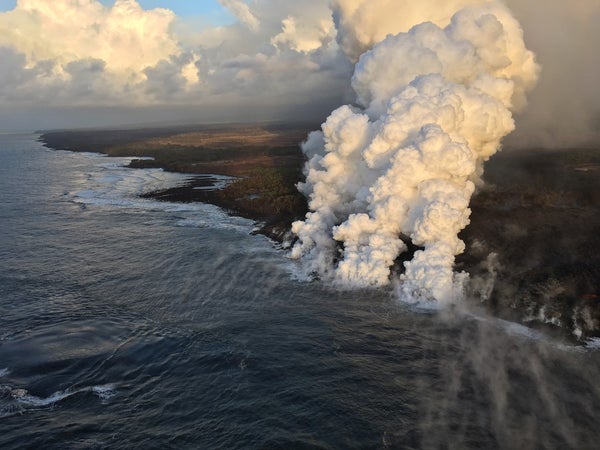
The ongoing eruption at Kilauea, beyond scorching the earth and destroying property, has shown the volcano to be a meteorological magician. An amazing variety of volcanic weather is being created on Hawaii’s Big Island.
The sky show is due to Kilauea’s lava, which is about as hot as lava is going to get. Its supply of heat to the surface and its idiosyncratic geochemistry are generating an abundance of beautiful and freakish wonders, from lava-launching whirlwinds to plumes of potentially lethal acidic haze.
Kilauea is not the only volcano with such weather wizardry. Similar wonders have been seen at other volcanoes—some on other worlds, within and far beyond the boundaries of the solar system. Here is a guide to some of the most striking Earthbound and extraterrestrial examples.
On supporting science journalism
If you're enjoying this article, consider supporting our award-winning journalism by subscribing. By purchasing a subscription you are helping to ensure the future of impactful stories about the discoveries and ideas shaping our world today.
It’s clear some forms of volcanic weather can be dangerous, so greater understanding and awareness of them is key. These apparitions also remind us that fiery fountains have long affected weather systems and have even transformed Earth’s climate through prolonged gaseous effusions. In recent times they’ve occasionally canceled out summers or triggered droughts; the Tambora cataclysm did that in the early 19th century. Beyond the practical, though, these partnerships between volcanism and the atmosphere are simply stunning to see. For brief moments, the realization that lava flows can drive machinations in the sky makes such meteorological manifestations seem very close to magic.