Edited by Dava Sobel
We think of metamorphoses
as glorious and beautiful,
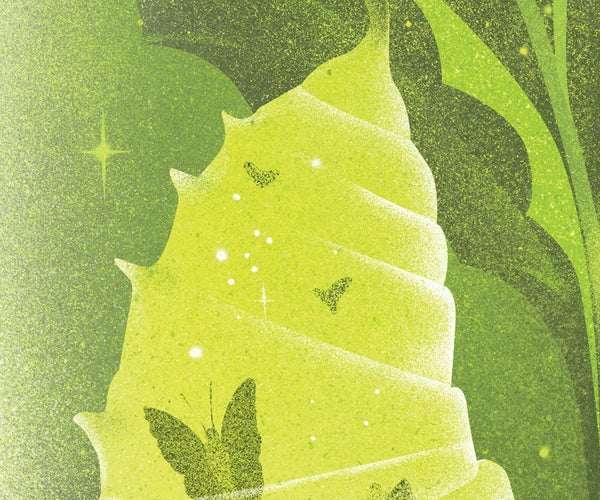
a quiescent
chrysalis emerging
as a yellow butterfly
slowly unfolding her
On supporting science journalism
If you're enjoying this article, consider supporting our award-winning journalism by subscribing. By purchasing a subscription you are helping to ensure the future of impactful stories about the discoveries and ideas shaping our world today.
translucent wings
letting them dry
in the open air
and flying off
in a flittering arc
reminding us
of our emergence from
the chrysalis of self-conscious
adolescence
into the less tumultuous
uncertainties
of adulthood and of
the final transformation
we yearn for, the moldering body
releasing the immortal spirit, but imagine
how the wormlike
caterpillar feels after a life
of serenely munching leaves
to curl herself
on the underside of a chosen leaf
secreting a fiber
spinning a cocoon, incorporating
twigs, urticating hairs,
fecal pellets, bits of leaf and bark
disguised from
predatory bats and nightjars
while the arrival works its magic and
if she’s aware
as all things are aware
rock, tree, wind
she must feel
her skin stretching, covering
her body now
a thing with wings
that doesn’t resemble
hope so much
as grace, the undeserved love
that comes into our lives
as a gift.
Subscribe to Support Independent Journalism
Great science journalism requires human expertise, time, effort and creativity. And it costs money. That’s why I and the journalists here at Scientific American hope you’ll join our community.
When you subscribe, you are supporting staff and freelance journalists who are passionate about telling science stories that are true, important and compelling. Our editors and reporters are often experts in their fields, which means they understand the nuances of big discoveries and can untangle the breakthroughs from the hype. With a subscription, you are also supporting rigorous fact-checking to ensure the words we publish are precise and accurate. And you’re supporting original illustrations, graphics and photos that bring you closer to an advanced laboratory, an ice sheet in Antarctica or a space mission in orbit. You’re helping us craft other types of high-quality journalism as well: Our newsletters are carefully written, edited and curated by staffers you have or will come to know and love. Our Science Quickly podcast is based on original reporting, collaboration with editors and scientists and exacting production.
Subscriptions keep this engine running so we can continue to deliver thoughtful, rigorous and independent science journalism to you. In an era of viral misinformation, this work is crucial. If you value what we do, I hope you’ll consider joining us as a subscriber