Edited by Dava Sobel
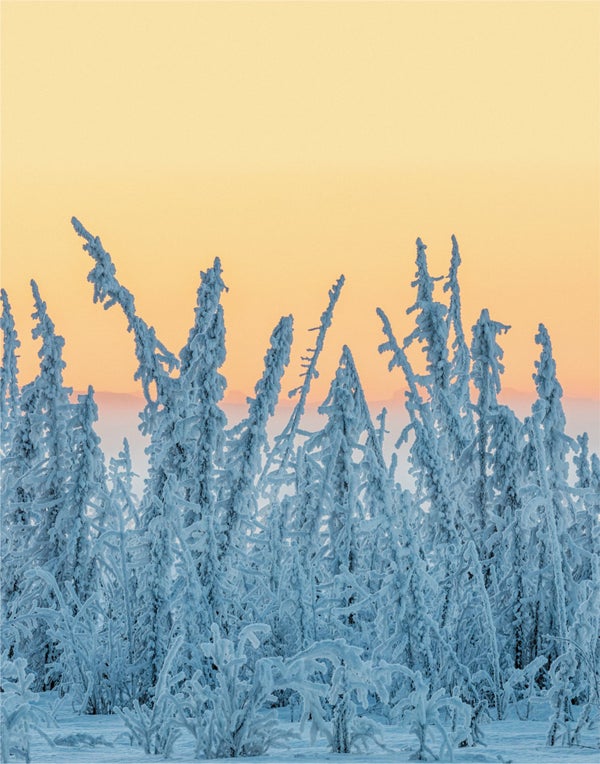
Absent of taproot, the black spruce leans madly
where permafrost slumps into thermokarst. Who
wouldn't fall down soused when the ground beneath
began to melt, to buckle and sink? Who wouldn't drink?
In the boreal forests, in a landscape staggered
with lurching birches, ice is a memory, while farther
north, where glaciers begin to thin, ice is memory,
or the keeper of memories, a kind of collective mind
On supporting science journalism
If you're enjoying this article, consider supporting our award-winning journalism by subscribing. By purchasing a subscription you are helping to ensure the future of impactful stories about the discoveries and ideas shaping our world today.
in which buried deep are layers of ancient volcanic ash,
soot from fires primeval, banked bubbles of archaic air—
stories stored, frozen, in cerulean cerebral cortex, a vortex
stilled, which soon may spill. The polar ice, in stripes, remembers
what we weren't here to recall, but as with all memory,
what is buried in the blue yonder—if it escapes the icescape—
could kill us. Deep memory is a danger zone. Ice is another
nether. No wonder it numbs. No wonder it burns.
Subscribe to Support Independent Journalism
Great science journalism requires human expertise, time, effort and creativity. And it costs money. That’s why I and the journalists here at Scientific American hope you’ll join our community.
When you subscribe, you are supporting staff and freelance journalists who are passionate about telling science stories that are true, important and compelling. Our editors and reporters are often experts in their fields, which means they understand the nuances of big discoveries and can untangle the breakthroughs from the hype. With a subscription, you are also supporting rigorous fact-checking to ensure the words we publish are precise and accurate. And you’re supporting original illustrations, graphics and photos that bring you closer to an advanced laboratory, an ice sheet in Antarctica or a space mission in orbit. You’re helping us craft other types of high-quality journalism as well: Our newsletters are carefully written, edited and curated by staffers you have or will come to know and love. Our Science Quickly podcast is based on original reporting, collaboration with editors and scientists and exacting production.
Subscriptions keep this engine running so we can continue to deliver thoughtful, rigorous and independent science journalism to you. In an era of viral misinformation, this work is crucial. If you value what we do, I hope you’ll consider joining us as a subscriber