LARGE HADRON COLLIDER
Lab coat voyeurs
collide
scatter
Protons bloom
one nanosecond
two
On supporting science journalism
If you're enjoying this article, consider supporting our award-winning journalism by subscribing. By purchasing a subscription you are helping to ensure the future of impactful stories about the discoveries and ideas shaping our world today.
Lace webs sprout
charm quarks
like Cheshire cats
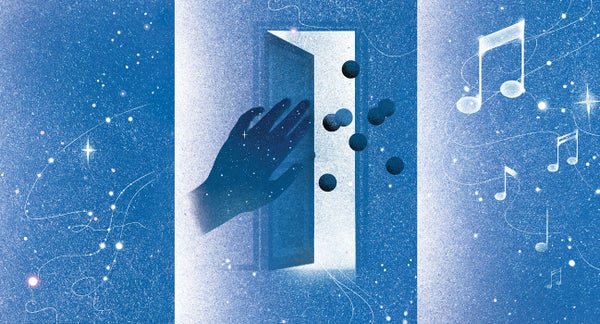
MAXWELL’S DEMON
Demon bars a door
too tiny
for the likes of us to see
He lets fast atoms pass
from B to A
Their slower cousins
from A to B
Exclusion being
so small a price
to pay for immortality
MUSIC FOR THE HEAT DEATH OF THE UNIVERSE
“There’s music in everything, even defeat.”
—Charles Bukowski
Last star ember
goes dark
Every atom freezes
absolute zero
A mournful oboe
lingers
wavers
stops
Subscribe to Support Independent Journalism
Great science journalism requires human expertise, time, effort and creativity. And it costs money. That’s why I and the journalists here at Scientific American hope you’ll join our community.
When you subscribe, you are supporting staff and freelance journalists who are passionate about telling science stories that are true, important and compelling. Our editors and reporters are often experts in their fields, which means they understand the nuances of big discoveries and can untangle the breakthroughs from the hype. With a subscription, you are also supporting rigorous fact-checking to ensure the words we publish are precise and accurate. And you’re supporting original illustrations, graphics and photos that bring you closer to an advanced laboratory, an ice sheet in Antarctica or a space mission in orbit. You’re helping us craft other types of high-quality journalism as well: Our newsletters are carefully written, edited and curated by staffers you have or will come to know and love. Our Science Quickly podcast is based on original reporting, collaboration with editors and scientists and exacting production.
Subscriptions keep this engine running so we can continue to deliver thoughtful, rigorous and independent science journalism to you. In an era of viral misinformation, this work is crucial. If you value what we do, I hope you’ll consider joining us as a subscriber