
On supporting science journalism
If you're enjoying this article, consider supporting our award-winning journalism by subscribing. By purchasing a subscription you are helping to ensure the future of impactful stories about the discoveries and ideas shaping our world today.
A century ago a father and a son
labored to replicate the intricate
structure of nearly eight hundred
species of plants in four thousand
delicate models. Leopold Blaschka
and his son Rudolph were masters
of lampwork, blowing and shaping
glistening molten glass over a torch
of blue flame. Fame came to them
when Harvard University put most
of the collection on permanent display
in its Museum of Natural History.
What was kept locked away were
the monstrous Venturia inaequalis,
Taphrina deformans, and a taste of
Monilinia fructigena, a grotesque
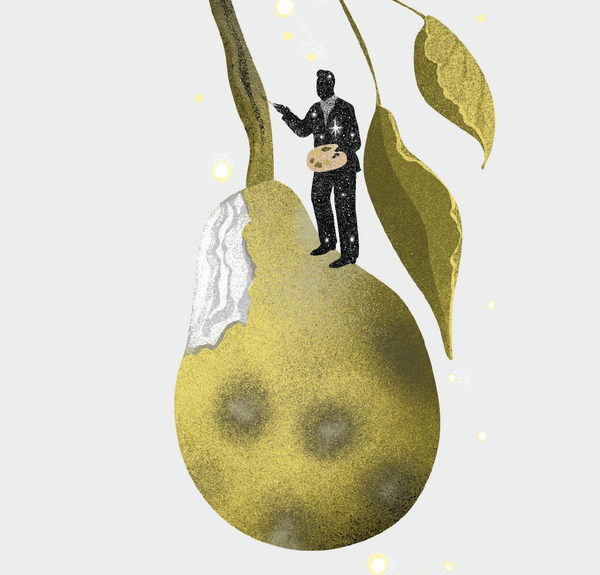
perversion of beauty called fruits
in decay. For a few short months
in the nineteenth year of this,
the third millennium, just before
a worldwide pandemic laid waste
to humans, out came twenty examples
of peach leaf curl, pear scab, brown
rot and a whole pale microcosm
of Aspergillus rising from the cabinet
floor in tiny zombie-flesh trees.
Cryptogamic bodies like ferns, mosses,
algae and fungi spread themselves
around by spore, so more of an orchard
will share an infection, the placards said.
Detection still comes from studying
the spots, dots, desiccations and rot
in this fragile freaks’ gallery, simulacra
of apples sharing a barrel of cultivated
Latin names for diseases at once as old
and relentless as withering time, and yet
with a genius for budding afresh to breed
death in our run-amuck Garden of Eden.