
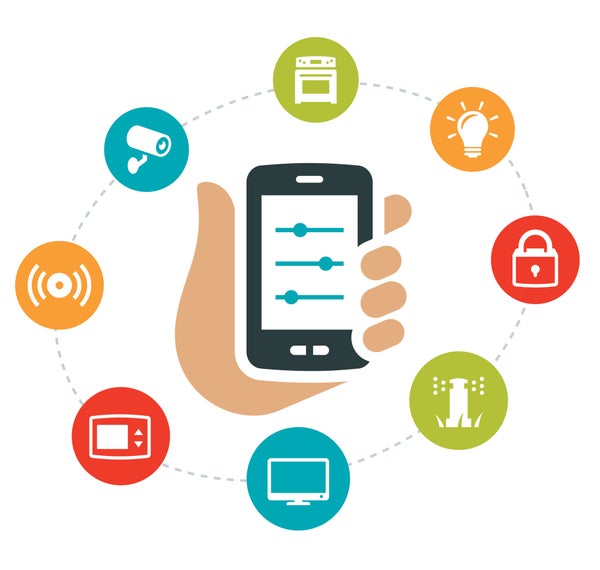
This month my Scientific American column tackled the challenges that wirelessly controllable household appliances—the annoyingly termed “Internet of Things”—are facing in consumer acceptance. They're just not selling well.
That hasn't stopped companies from trying, though.
Remote-controlled thermostats and security cameras may make sense. But in the gold rush of the first wave of "IoT" products, not everything does. Here, for example, are a few of the connected and “smart” products that may raise your eyebrows.
On supporting science journalism
If you're enjoying this article, consider supporting our award-winning journalism by subscribing. By purchasing a subscription you are helping to ensure the future of impactful stories about the discoveries and ideas shaping our world today.
The Internet of Toilet Paper Rolls: RollScout is a toilet paper holder that lets you know (by e-mail, text, or app) when the roll is empty. “Especially useful for small businesses, such as cafes and restaurants, that have public restrooms and are focused on providing the best customer experience possible,” the creators say. (It is $60 for most finishes; the company site says it accepts preorders.)
The Internet of Egg Trays: The Egg Minder tray ($13.75 from Amazon) holds 14 eggs in your refrigerator. It also sends a wireless signal to your phone to let you know how many eggs are in it and which ones are going bad.
The Internet of Diapers: A start-up called 24eight has developed a prototype diaper that, when wet, texts the parent's phone. “A parent can remotely monitor a care center and get ‘diaper wet’ messages when they are at work," CEO David Schieffelin told The Wall Street Journal.
The Internet of Water Bottles: Thermos's $60 Connected Hydration Bottle tracks how much water you drink. It communicates your current tally with your phone by Bluetooth—either on the Fitbit app or Thermos's own water-tracking app.
The Internet of Jump Ropes: The Tangram Smart Rope, as you could probably guess, counts how much you jump rope with it; a companion app keeps track. The coolest part, though, is that embedded LEDs spell out your current count, as though on a ghostly hovering dashboard before you, as the rope flies through the air. (The Smart Rope was a successful Kickstarter campaign, said to be entering the manufacturing process in September 2015—but the company still says only that it's taking preorders.)
The Internet of Plants: The Parrot Flower Power ($50) is a sensor that you shove into the dirt near a plant, either in a pot or in open ground. Every 15 minutes it measures everything the plant is getting—moisture, fertilizer, temperature and light intensity—and transmits it by Bluetooth to a smartphone app.
The Internet of “Good Dogs”: The ICPooch, a Shark Tank success story ($227 from Amazon), lets you have video chats with your dog when you’re away. (You have to supply the iPad or other tablet on the dog's end; the iCPooch just holds it.) When you tap a button in the corresponding phone app, the device dispenses a dog treat by remote control.