
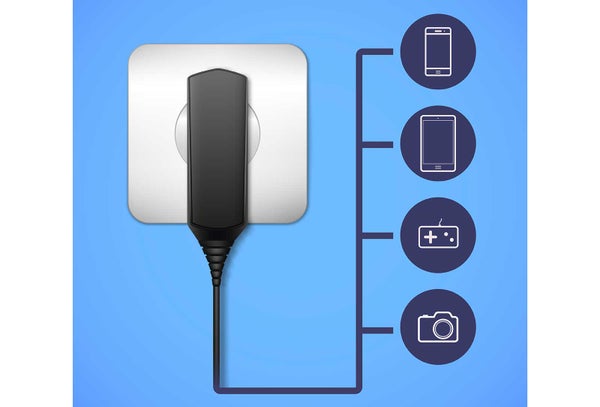
My March Scientific American column explores the USB Type-C, a new connector that can replace the power, data, video and headphone jacks on phones, tablets and laptops. It’s a fantastically successful design—there’s no wrong way to plug it in, for example, and it works the same on every brand and model. But it’s also a new idea, and something that will take getting used to. So here, for your educational pleasure, is a Frequently Asked Questions document about USB-C.
You said that Apple is even using USB-C. Does that mean Apple will change its iPhone connector yet again?
So far, Apple has put USB-C on only one machine: its latest laptop model, the 12-inch MacBook. In so doing, Apple eliminated the magnetic MagSafe laptop charging connector that it touted and promoted for years. (The advantage of MagSafe is that when someone trips on the cord, it doesn’t pull the whole laptop off the desk.)
It’s a good bet, however, that having shown it’s willing to kill off its own children this way, Apple will continue to replace its laptop jacks with USB-C.
On supporting science journalism
If you're enjoying this article, consider supporting our award-winning journalism by subscribing. By purchasing a subscription you are helping to ensure the future of impactful stories about the discoveries and ideas shaping our world today.
The iPhone/iPad connector, though, is another story. After manufacturing hundreds of millions of devices with the original, 30-pin iPhone connectorApple drew outrage from the faithful when, in 2012, it replaced that connector with a new, smaller one called Lightning. Suddenly the millions of chargers, alarm clocks, speaker docks and other iPhone accessories didn’t fit anymore.
Don't hurt me, but it would be amazing if Apple did move to USB-C on iPhones and iPads; at that point, almost every new phone and tablet in the world, from every major manufacturer, would use the same charger.
But it’s more likely that Apple will keep using its own, proprietary Lightning connector on iPhones and iPads for at least a few more years.
What if I want to charge my laptop and plug in a flash drive simultaneously?
USB-C can carry power, data and video audio simultaneously. So what if a device (such as Apple’s 2015 12-inch MacBook) has only one USB-C jack?
In that case, you have to buy a splitter. Apple sells one for $80.
What about printers, scanners and flash drives that have the old USB?
Eventually, new printers, scanners, flash drives, cameras, monitors and headphones will all come with USB-C jacks. (You can already buy USB-C flash drives.)
In the meantime, if you want to connect an older one to your USB-C laptop, you’ll need an adapter. Note, however, that many new laptops (such as Google’s Pixel or Microsoft’s Surface Book) come with both USB-C and the older-style USB jacks. In the short term, therefore, you won’t need adapters for your older peripherals.