
A lag in improving the energy efficiency of buildings has made them the second-largest source of carbon dioxide emissions in the United States. The resulting economic impacts from energy expenses falls heavily on people who live in low-income housing.
The Department of Energy is trying to address that by launching an experiment with architects, construction experts and public housing agencies to develop energy efficiency techniques that could spread into other areas of the country, said Kelly Speakes-Backman, a principal deputy assistant secretary at DOE.
Speaking at a DOE webinar earlier this week, Speakes-Backman said “an all-out sprint” will be needed to reduce building emissions to meet national climate goals by midcentury.
On supporting science journalism
If you're enjoying this article, consider supporting our award-winning journalism by subscribing. By purchasing a subscription you are helping to ensure the future of impactful stories about the discoveries and ideas shaping our world today.
There are 130 million commercial and residential buildings in the United States today, and 75 percent of them are expected to be standing in 2050, she said.
DOE’s Office of Energy Efficiency and Renewable Energy (EERE) will attempt to create construction and renovation practices this year by focusing on public housing in seven cities, beginning with Knoxville, Tenn.
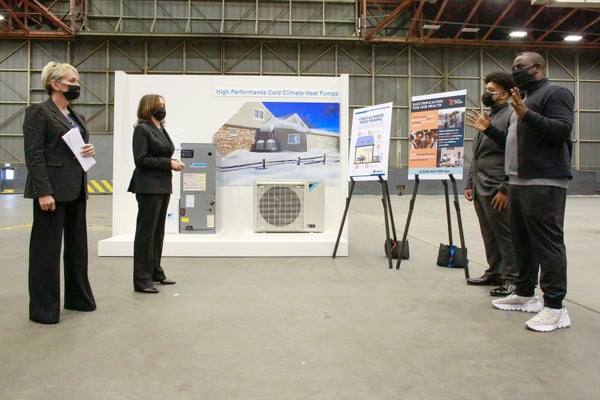
The objective is to renovate eight to 10 housing units that were built in 1938. The updates will use prefabricated exterior panels to improve the insulation and appearance of the units and introduce heat pumps and efficiency controls to improve their heating, ventilation and air conditioning systems. The goal is to cut their electricity use by 75 percent.
According to DOE, the project involves $32 million in grants to public housing agencies in Knoxville; Albany, N.Y.; Arvada, Colo.; Cambridge, Mass.; and Syracuse, N.Y. , and projects in Vermont and Pennsylvania.
The Knoxville buildings, which contain 244 units, are already scheduled for renovations.
“Then other building owners can decide if these are technologies they want to pursue,” said Diana Hun, a group leader at Oak Ridge National Laboratory, where experts from DOE’s Advanced Building Construction (ABC) Initiative will work with builders and architects to go well beyond conventional renovation techniques.
Ben Bentley, who heads the Knoxville public housing authority, said about 20,000 people live in subsidized housing. “We want to see them catch up in their sustainability, and utility bills are a huge piece of that,” he said. Urban housing authorities often don’t have sufficient budgets to cover renovations that reduce energy costs.
“This is a really big deal,” Bentley added.
If the improvements work, the projects planned in Knoxville and other cities could help influence the energy efficiency of millions of new buildings being planned before 2050.
According to a report by the Department of Energy’s EERE: “Building construction practices have remained largely the same over the past century. While other industries such as manufacturing and communications have transformed through digitization and process improvements, productivity in the U.S. construction industry has consistently declined since 1968.”
That has led to higher construction costs that “often lead building owners and investors to forego the latest energy-efficiency technologies,” even though they “decrease the total cost of operating and maintaining new buildings.”
More than half of existing buildings, according to the agency, were built before 1980, when modern building codes began to require improved energy performance.
The result is that only about 1.75 percent of homes and 2.2 percent of commercial real estate projects are retrofitted for more efficient energy use each year.
Reprinted from E&E News with permission from POLITICO, LLC. Copyright 2022. E&E News provides essential news for energy and environment professionals.