
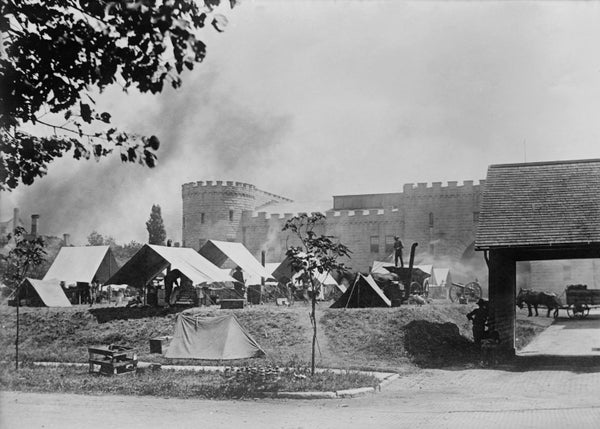
A site in Springfield, Ill., where a white mob murdered six African Americans and burned Black homes and businesses in a 1908 race riot, could become a new addition of the National Park Service.
The COVID-19 relief bill signed by President Trump last night included a provision that ordered the National Park Service to conduct a study to determine whether to allow the site to become part of the NPS portfolio, which now includes 423 units.
The Illinois site gained attention from federal officials in August when Interior Secretary David Bernhardt made it part of the African American Civil Rights Network. That network, created by Congress in 2018, seeks to bring attention to events linked to the nation’s long push for civil rights (Greenwire, Aug. 21).
On supporting science journalism
If you're enjoying this article, consider supporting our award-winning journalism by subscribing. By purchasing a subscription you are helping to ensure the future of impactful stories about the discoveries and ideas shaping our world today.
Publicity of the mass violence in the summer of 1908 in Springfield, which attracted a white mob of at least 5,000 people, helped lead to the creation of the NAACP.
Getting the study included in the COVID-19 aid package marked a victory for members of the Illinois congressional delegation, including Republican Rep. Rodney Davis, who has helped lead an effort to make the site a national monument.
Davis said passage of the bill marks “a critical step towards giving the site the recognition it deserves and ensuring that future generations of Americans will never forget about the innocent lives that were lost.”
A formal designation of the site could still be years away, with other projects already in the pipeline.
In November, NPS launched two of its latest studies to assess whether to add former President George W. Bush’s childhood home in Midland, Texas, and Camp Amache in Granada, Colo., where more than 7,000 Japanese Americans were imprisoned during World War II (Greenwire, Nov. 24).
Under federal requirements, NPS conducts “special resource studies” to determine whether sites should be added, judging them on four standards set by Congress: national significance, suitability, feasibility and the need for NPS management.
The studies take an average of three years to complete.
Reprinted from Greenwire with permission from E&E News. E&E provides daily coverage of essential energy and environmental news at www.eenews.net.