
The global energy crisis sparked by Russia’s war in Ukraine has “sparked unprecedented momentum” for renewable energy, according to a report Tuesday from the International Energy Agency.
IEA projected that global renewable energy capacity will increase by 2,400 gigawatts between 2022 and 2027—an 85 percent jump in comparison to the growth rate in the last five years. Renewables will overtake coal as the world’s largest electricity source by 2025, the report said.
The five-year growth forecast for renewables is 30 percent higher than what IEA projected in last year’s report, marking the group’s “largest ever upward revision,” the report said.
On supporting science journalism
If you're enjoying this article, consider supporting our award-winning journalism by subscribing. By purchasing a subscription you are helping to ensure the future of impactful stories about the discoveries and ideas shaping our world today.
The shift “is a clear example of how the current energy crisis can be a historic turning point towards a cleaner and more secure energy system,” said Fatih Birol, executive director at IEA, in a statement.
Both higher fossil energy prices and concerns about energy supply disruptions are driving the acceleration of wind, solar and other renewables, IEA’s analysts wrote.
According to Pierpaolo Cazzola, a global research fellow at Columbia University’s Center on Global Energy Policy, growth for renewables should be “robust” in Europe and beyond, even if fossil energy prices begin to ease or fluctuate.
“Even if fossil energy prices were to fall, Europe would remain exposed to a need for import, paired with price volatility. Europe will therefore continue to have a structural interest to electrify and increase its reliance on domestically produced renewable energy,” Cazzola said in an email.
In IEA’s forecast, solar and wind power will account for the majority of renewable energy’s expansion between 2022 and 2027.
“Green” hydrogen—produced via a water-splitting process powered by renewable energy—will become a driver of wind and solar power expansion, accounting for about 2 percent of renewable capacity growth, IEA said.
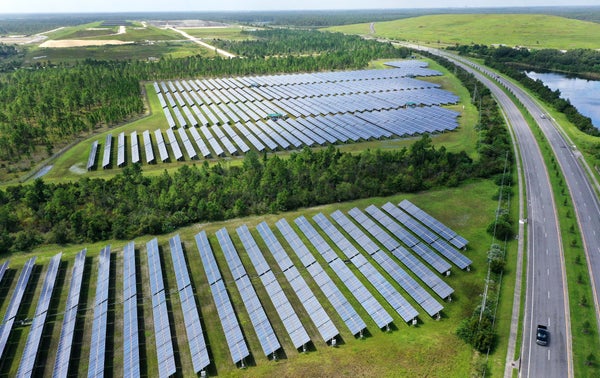
Solar remains the most economic option for new electricity generation in most of the world, according to the report. Solar alone makes up over 60 percent of the projected expansion of renewable energy capacity annually over the next five years, and is expected to outpace coal in terms of installations by 2027, IEA said.
According to Heymi Bahar, a senior renewable energy analyst at IEA, permitting timelines for wind projects lag behind those for solar projects in many parts of the world.
“Also, social acceptance of wind compared to solar is significantly lower, thus making those investments more complicated,” Bahar said in a press briefing Thursday.
The world could speed up renewables’ growth further by taking steps to expand grid infrastructure, addressing policy uncertainty, and permitting challenges and securing financing for projects in developing countries, the report said.
At the press briefing, Birol said Europe has yet to “make the most of” renewables’ potential to substitute for Russian gas. IEA will release a list of recommendations for European policymakers seeking to address expected winter shortages of natural gas for space heating, Birol said.
The report also forecasts that renewable generation capacity growth will fall short of what’s needed for the global energy sector to achieve net-zero greenhouse gas emissions by 2050.
The world—and Europe in particular—is responding to the energy crisis by pursuing energy efficiency measures, according to IEA’s latest annual report on energy efficiency released earlier this month. But global investments in energy efficiency in the second half of this decade are projected to reach about half of the levels needed to align with a net-zero greenhouse gas emissions scenario, the organization said.
Even so, Birol said that “it is far too early to write the obituary of the 1.5 degree target,” referring to the goal of limiting global average warming to 1.5 degrees Celsius.
Reprinted from E&E News with permission from POLITICO, LLC. Copyright 2022. E&E News provides essential news for energy and environment professionals.