
California is experiencing more wildfires, illness and drought as the impacts of climate change accelerate, according to a report released Tuesday.
The state’s fourth edition of “Indicators of Climate Change in California” finds that such impacts are hitting California sooner and more forcefully than previously expected. Published by the state Office of Environmental Health Hazard Assessment, the report says that half of the state’s 20 largest wildfires occurred in 2020 and 2021, heat waves have doubled in frequency in some areas, and glaciers are rapidly disappearing.
Yana Garcia, secretary of the California EPA, said the report shows “how some of our glaciers have all but disappeared forever, and how a hotter and drier planet is threatening drinking water supplies and public health.”
On supporting science journalism
If you're enjoying this article, consider supporting our award-winning journalism by subscribing. By purchasing a subscription you are helping to ensure the future of impactful stories about the discoveries and ideas shaping our world today.
“In many ways, this paints a pretty grim picture,” Garcia told reporters during a briefing.
Garcia highlighted the state’s efforts to address climate impacts, including $54 billion in its fiscal 2022-23 budget to deal with drought, reduce wildfire risk, transition away from fossil fuels and tackle other climate-related issues. She also emphasized the state’s influence beyond its borders, such as through a mandate to sell increasing numbers of zero-emission vehicles, which has been adopted by other states.
But as California enacts climate policy, it simultaneously wrestles with worsening climate impacts. Tuesday’s report comes after a 10-day heat wave in September shattered nearly 1,000 temperature records across the state.
The report found that the frequency of daytime heat waves more than doubled in five locations studied. Prior to 1950, such events averaged one to three per year; now, they occur five to six times a year. Nighttime heat waves similarly increased to five to seven per year at 10 locations, according to the report, with one area seeing as many as 10 heat waves annually.
That raises concerns about outdoor workers, who are often located in areas prone to heat waves, Garcia said. Data from workers’ compensation claims and heat-related illness reported by California workers increased about threefold from 2000 to 2017, officials said.
Part of the $54 billion in state climate funding goes toward dealing with extreme heat, Garcia said. California is developing the nation’s first-ever heat ranking system, though it’s not expected to be available until 2025.
The report also found that glaciers and snowfields have virtually disappeared in the Trinity Alps, between Trinity County and Eureka in Northern California. In the Sierra Nevada, some of the largest glaciers have lost 65 to 90 percent of their area.
“This has important ecological consequences, as well as impacts on water availability for agriculture and other uses,” said Amy Gilson, deputy director of external and legislative affairs at the Office of Environmental Health Hazard Assessment.
Those glaciers and snowfields act as reservoirs, releasing cold water for species such as salmon. Counts of adult spring-run Chinook salmon and the Salmon River “have flatlined in the last five years,” Gilson said.
There’s also been an increase in health-related issues connected to climate change, such as valley fever, the report said.
Valley fever is an infection caused by a fungus that lives in dust and soils in the southwest U.S. A person can contract it by breathing the spores in the air that are mixed in with the dust, Gilson said.
The report found a fivefold increase in people with the disease from 2001 to 2021. Climate change is one of the likely multiple causes, Gilson said, because the spores disperse more effectively in hot and dry conditions.
Another worsening impact: tree deaths. An estimated 170 million trees died between 2010 and 2021, peaking in 2016, the fourth year of an extreme drought, according to the report.
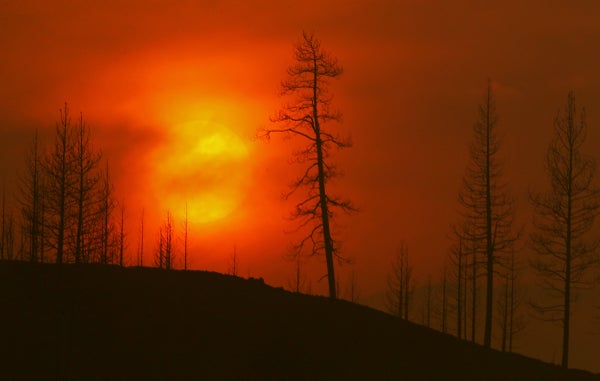
That meant more flammable fuels, increasing the risk of severe wildfires, the report said. In 2020, about 4.2 million acres burned in the state, more than double the area burned in any other year on record. That same year, California experienced its first “gigafire,” when the August Complex burned more than 1 million acres in seven counties.
Reprinted from E&E News with permission from POLITICO, LLC. Copyright 2022. E&E News provides essential news for energy and environment professionals.