
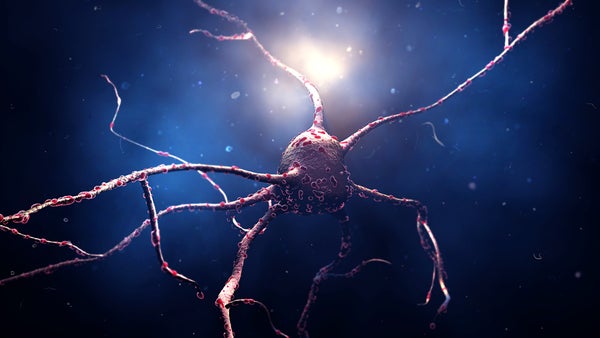
Japanese neurosurgeons have implanted ‘reprogrammed’ stem cells into the brain of a patient with Parkinson’s disease for the first time.
The condition is only the second for which a therapy has been trialled using induced pluripotent stem (iPS) cells, which are developed by reprogramming the cells of body tissues such as skin so that they revert to an embryonic-like state, from which they can morph into other cell types.
Scientists at Kyoto University use the technique to transform iPS cells into precursors to the neurons that produce the neurotransmitter dopamine. A shortage of neurons producing dopamine in people with Parkinson’s disease can lead to tremors and difficulty walking.
On supporting science journalism
If you're enjoying this article, consider supporting our award-winning journalism by subscribing. By purchasing a subscription you are helping to ensure the future of impactful stories about the discoveries and ideas shaping our world today.
In October, neurosurgeon Takayuki Kikuchi at Kyoto University Hospital implanted 2.4 million dopamine precursor cells into the brain of a patient in his 50s. In the three-hour procedure, Kikuchi’s team deposited the cells into 12 sites, known to be centres of dopamine activity. Dopamine precursor cells have been shown to improve symptoms of Parkinson’s disease in monkeys.
Stem-cell scientist Jun Takahashi and colleagues at Kyoto University derived the dopamine precursor cells from a stock of IPS cells stored at the university. These were developed by reprogramming skin cells taken from an anonymous donor.
“The patient is doing well and there have been no major adverse reactions so far,” says Takahashi. The team will observe him for six months and, if no complications arise, will implant another 2.4 million dopamine precursor cells into his brain.
The team plans to treat six more patients with Parkinson’s disease to test the technique’s safety and efficacy by the end of 2020.
Takahashi says that if this trial goes well, they might have enough evidence for the treatment to be sold to patients as early as 2023, under Japan's fast-track approval system for regenerative medicines. “Of course it depends on how good the results are,” he says.
In 2014, ophthalmologist Masayo Takahashi, Takahashi’s wife, created retinal cells from iPS cells that were used to treat eye disease.
This article is reproduced with permission and was first published on November 14, 2018.