
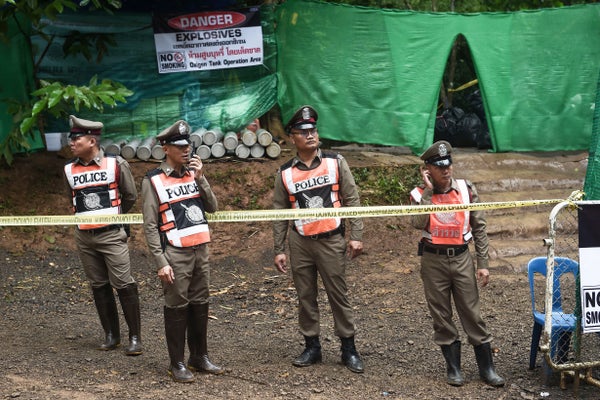
Youth soccer team members rescued more than two weeks after sudden flooding trapped them in a cave complex in Thailand are now convalescing at a hospital in the northern city of Chiang Rai. In addition to treating the boys for potential dehydration, malnutrition and oxygen deprivation, their doctors also plan to closely monitor them for symptoms of diseases that may have been transmitted by animals living in the cave system. Operations were underway at the time of publication to rescue the 12 boys (ages 11 to 17) and their coach.
The “next step is to make sure those kids and their families are safe, because living in a cave has a different environment, which might contain animals that could transmit…disease,” news reports quoted a statement from Chiangrai Prachanukroh Hospital as saying. The boys and their family members have been told to watch for symptoms such as headache, nausea, muscle pain or difficulty breathing, the reports added.
Yet based on the location where the boys were trapped—more than four kilometers from the cave complex’s main entrance, past some fully submerged passages—and the fact they have been swimming out wearing full scuba face masks, it seems unlikely that they were living with bats in the cave or breathed in bat-associated pathogens during their rescue, several infectious disease experts told Scientific American. “It’s hard to imagine bats got that deep into the cave because of all those narrow passageways, but it is possible,” says Ian Lipkin, a zoonotic expert and professor of epidemiology at the Mailman School of Public Health at Columbia University. “It’s unlikely that there would be many animals in there,” notes Jonathan Epstein, a veterinarian and epidemiologist at EcoHealth Alliance, a nonprofit organization that studies pandemics and how to prevent them. Bats typically like to roost in areas they can easily enter and exit, not in places that fully flood, he adds.
On supporting science journalism
If you're enjoying this article, consider supporting our award-winning journalism by subscribing. By purchasing a subscription you are helping to ensure the future of impactful stories about the discoveries and ideas shaping our world today.
Bats in Thailand have been linked with a wide range of viruses—including Nipah, which can cause brain inflammation, and others that are similar to severe acute respiratory syndrome (SARS)—Lipkin says. But it seems more likely the boys would have been exposed to infection-causing bacteria when they swam through the dirty water with cuts and scrapes. “If you are trying to prioritize issues with respect to health care for these kids, number one would be psychological damage and second will be bacterial infections from the cuts and scrapes they may have encountered—so things like tetanus,” Lipkin says.
When the boys first receive medical care they will be asked what elements they were exposed to and if they saw any bats or bat guano, says Amesh Adalja, an infectious disease doctor and a senior scholar at the Johns Hopkins Center for Health Security. Rabies, for example, is often treated prophylactically if someone was known to be sleeping in the presence of a bat. “But if there were no bats in the cave, that will remove a lot of concerns about things like rabies as well as concerns about dangerous diseases spread by inhaling infected bat droppings,” Adalja says.
One of the chief challenges for the boys’ care team will be teasing apart which health problems are due to dehydration and stress and which might be signs of infection, because the symptoms can look similar, Adalja notes. Fever and an elevated heart rate could be due to any of those factors, he says. “These are all things you would expect to see in someone under this type of severe stress—not knowing if they would live or die and then going through this harrowing rescue.”
Other than treating any scrapes and bruises with antiseptic to stave off infection, there may be relatively common gastrointestinal problems that will also need to be watched. The team would have defecated in the cave and may have drunk contaminated water as a result, Adalja says—and that water may have also been teeming with bacteria that surged in with the rainwater. In the days ahead, he says, “it’s important to do a head-to-toe examination and think about what they were exposed to in that cave and in the water.”