On supporting science journalism
If you're enjoying this article, consider supporting our award-winning journalism by subscribing. By purchasing a subscription you are helping to ensure the future of impactful stories about the discoveries and ideas shaping our world today.
In Brief
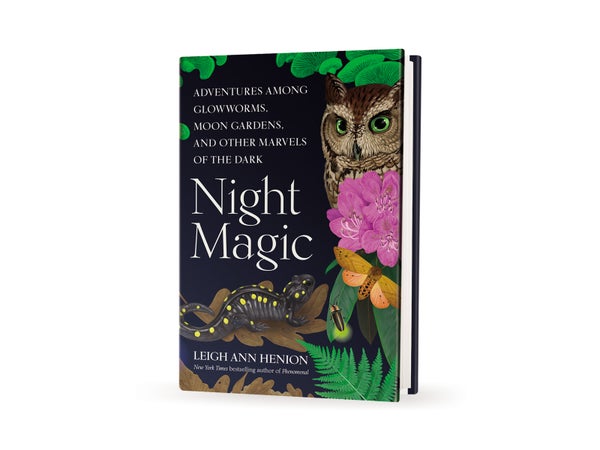
Night Magic: Adventures among Glowworms, Moon Gardens, and Other Marvels of the Dark
by Leigh Ann Henion.
Algonquin, 2024 ($30)
I recently returned from a camping trip with legs covered in bug bites and a newfound awareness of my reliance on artificial light and the glow of electronic devices. It seems author Leigh Ann Henion had a similar epiphany and sought an antidote by venturing into the Appalachian Mountains after hours. Night Magic chronicles her journey to “re-center darkness” through experiencing the living things that thrive in it: spotted salamanders that perform mating dances before an audience of fairy shrimp and tricolor bats that see through sound. Henion’s vivid style of nature writing and complementary self-reflection are reminders that witnessing the extraordinary can be as easy as shifting your bedtime back an hour and going outside.
Subscribe to Support Independent Journalism
Great science journalism requires human expertise, time, effort and creativity. And it costs money. That’s why I and the journalists here at Scientific American hope you’ll join our community.
When you subscribe, you are supporting staff and freelance journalists who are passionate about telling science stories that are true, important and compelling. Our editors and reporters are often experts in their fields, which means they understand the nuances of big discoveries and can untangle the breakthroughs from the hype. With a subscription, you are also supporting rigorous fact-checking to ensure the words we publish are precise and accurate. And you’re supporting original illustrations, graphics and photos that bring you closer to an advanced laboratory, an ice sheet in Antarctica or a space mission in orbit. You’re helping us craft other types of high-quality journalism as well: Our newsletters are carefully written, edited and curated by staffers you have or will come to know and love. Our Science Quickly podcast is based on original reporting, collaboration with editors and scientists and exacting production.
Subscriptions keep this engine running so we can continue to deliver thoughtful, rigorous and independent science journalism to you. In an era of viral misinformation, this work is crucial. If you value what we do, I hope you’ll consider joining us as a subscriber