
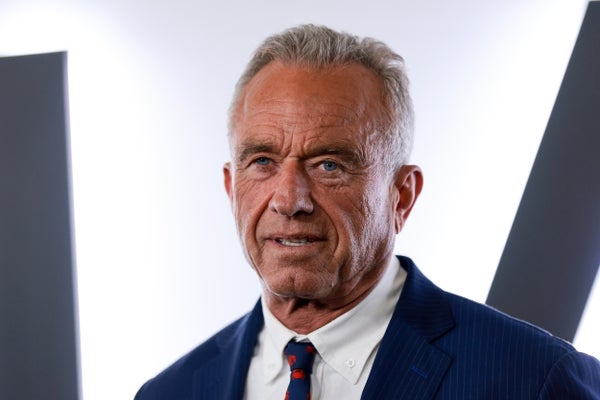
U.S. health and human services secretary Robert F. Kennedy, Jr.’s claim that a high-fat, low-carbohydrate diet may cure certain psychiatric conditions is misleading and not backed by evidence, experts say.
At an event in Tennessee on Wednesday touting new nutrition guidelines that emphasize eating a diet rich in red meat, whole milk and animal fats, Kennedy said that a doctor at Harvard had “cured schizophrenia using keto diets” and that there were studies showing people “lose their bipolar diagnosis by changing their diet.”
A person eating a ketogenic diet typically gets at least 70 percent of their calories from fat, about 20 percent from protein and as little from carbohydrates as possible.
On supporting science journalism
If you're enjoying this article, consider supporting our award-winning journalism by subscribing. By purchasing a subscription you are helping to ensure the future of impactful stories about the discoveries and ideas shaping our world today.
In his speech, Kennedy mentioned a “Dr. Pollan” at Harvard, but there appears to be no such person there or elsewhere who has studied the keto diet and its effect on schizophrenia; he may have meant to cite Christopher Palmer, an assistant professor of psychiatry at Harvard Medical School. The Department of Health and Human Services did not immediately respond to a request for comment.
“While I appreciate the secretary’s [apparent] enthusiasm for my research, I have never claimed to cure schizophrenia, and I have never used the word cure in any of my talks or my research,” Palmer says.
“The way that I think about the ketogenic diet is not about a good diet versus a bad diet or a healthy diet versus an unhealthy diet. I think about it as a metabolic intervention,” he adds.
Palmer co-authored a 2025 study that reviewed the evidence for the ketogenic diet as a possible treatment for schizophrenia. It found that small pilot studies suggested that the diet may improve some symptoms of the disorder in some people. But Palmer emphasizes that other people with the condition may not see any improvement with the keto diet.
Antipsychotic drugs are the frontline treatment for schizophrenia, although these medications come with serious side effects, and not all people with the condition respond well to them.
Jeff Volek, a professor at the Ohio State University, who has extensively studied ketogenic diets, says he isn’t aware of any published clinical trial that shows the diet can cure schizophrenia. But he adds that he wouldn’t be surprised if there were individual cases of people seeing some improvement in their schizophrenia symptoms that could be attributed to the diet.
“There are nuances here,” Volek says. “As a scientist, I personally would not use such strong language [as ‘cure’] without more definitive evidence from rigorous scientific studies.”
Evidence suggests that in other brain conditions, following a strict, clinician-monitored ketogenic diet can ameliorate some symptoms. For example, people with severe and rare seizure disorders, such as Dravet syndrome and Lennox-Gastaut syndrome, are known to benefit from following a ketogenic diet. Importantly, psychiatry has a history of adapting epilepsy treatments for other mental illnesses, Palmer notes. It’s possible that the keto diet influences brain inflammation, he says, and that mechanism may be at play in other psychiatric conditions.
He stresses that when psychiatrists talk about the keto diet, they are talking about a rigid treatment protocol, not an eating habit where someone attempts to avoid some foods and prioritize others.
“People following diets for health and wellness advice or even long-term cardiovascular health—it’s not at all the same thing as treating a serious brain disorder like epilepsy or schizophrenia,” Palmer says. “By no means would I ever want them to think that [a person with schizophrenia] can go wing it and just try a diet and cure themselves.”
Still, there may be some benefits. Other preliminary research suggests keto diets could have some effect in people with major depression. In a recent clinical trial, participants who followed a keto diet saw a very slightly greater improvement in their symptoms than participants who ate a diet rich in fruit and vegetables. This study and other recent research do not find clear evidence that the diet can cure depression. But research interest is growing, Palmer says.
“The great news is that two randomized, controlled trials of the ketogenic diet for schizophrenia just wrapped up,” says Palmer, who was a consultant to one of the trials, adding that the results will be published over the coming year.