New Issue: Orbital Catastrophe Ahead? Read Now

RFK, Jr., Questions Safety of Approved RSV Shots for Babies

FDA officials are newly scrutinizing several approved therapies to treat RSV in babies despite the fact that these shots were shown to be safe in clinical trials

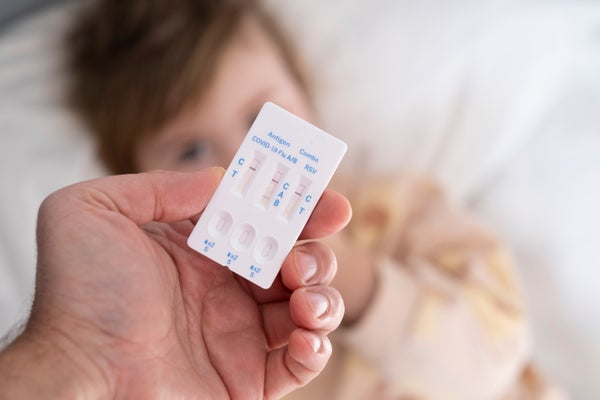
RSV test with baby

RSV test.

Foremniakowski/Getty Images

Join Our Community of Science Lovers!

U.S. health officials are reportedly questioning the safety of several approved therapies to treat respiratory syncytial virus (RSV) in babies.

The treatments—specifically, Sanofi and AstraZeneca’s drug Beyfortus and Merck’s drug Enflonsia—are shots that are given to infants in the first months of life to protect against complications from RSV, which is the number one cause of hospitalization in babies in the U.S.

RSV typically hits in winter and can cause severe disease and even death in young babies and older adults. The Centers for Disease Control and Prevention recommends that pregnant people get an RSV vaccine between 32 and 36 weeks of pregnancy during the period from September through January.


On supporting science journalism

If you're enjoying this article, consider supporting our award-winning journalism by subscribing. By purchasing a subscription you are helping to ensure the future of impactful stories about the discoveries and ideas shaping our world today.


The scrutiny marks the latest move by federal health agencies to question established vaccines and medications under Secretary of Health and Human Services Robert F. Kennedy, Jr., a noted vaccine skeptic. It comes days after a panel of influential vaccine advisors, all of whom were handpicked by Kennedy, voted to rescind the recommendation for a universal birth dose of the hepatitis B vaccine, despite what experts decried as a lack of evidence.

According to Reuters, FDA officials started investigating the RSV therapies over the summer. Vaccine skeptics have claimed, without evidence, that the shots could increase the risk of seizures in some infants.

In 2023 the FDA approved Beyfortus, a type of antibody drug, for babies born during or entering their first RSV season and in children up to two years old who are vulnerable to severe RSV. The agency approved Enflonsia, a similar drug, in June 2025. As with all drugs approved by the FDA, these medications were extensively tested in clinical trials for safety and efficacy before they were given the green light.

Tanya Lewis was formerly senior desk editor for health and medicine at Scientific American. She wrote and edited stories for the website and print magazine on topics ranging from COVID to organ transplants. She also appeared on Scientific American’s podcast Science Quickly and wrote Scientific American’s weekly Health & Medicine newsletter. She held a number of positions over her nearly 10 years at Scientific American, including health editor, assistant news editor and associate editor at Scientific American Mind. Previously, she has written for outlets that include Insider, Wired, Science News and others. She has a degree in biomedical engineering from Brown University and one in science communication from the University of California, Santa Cruz. Follow her on Bluesky @tanyalewis.bsky.social

More by Tanya Lewis

Subscribe to Support Independent Journalism

Great science journalism requires human expertise, time, effort and creativity. And it costs money. That’s why I and the journalists here at Scientific American hope you’ll join our community.

When you subscribe, you are supporting staff and freelance journalists who are passionate about telling science stories that are true, important and compelling. Our editors and reporters are often experts in their fields, which means they understand the nuances of big discoveries and can untangle the breakthroughs from the hype. With a subscription, you are also supporting rigorous fact-checking to ensure the words we publish are precise and accurate. And you’re supporting original illustrations, graphics and photos that bring you closer to an advanced laboratory, an ice sheet in Antarctica or a space mission in orbit. You’re helping us craft other types of high-quality journalism as well: Our newsletters are carefully written, edited and curated by staffers you have or will come to know and love. Our Science Quickly podcast is based on original reporting, collaboration with editors and scientists and exacting production.

Subscriptions keep this engine running so we can continue to deliver thoughtful, rigorous and independent science journalism to you. In an era of viral misinformation, this work is crucial. If you value what we do, I hope you’ll consider joining us as a subscriber

Thank you,

Jeanna Bryner, Editor in Chief, Scientific American

Subscribe