
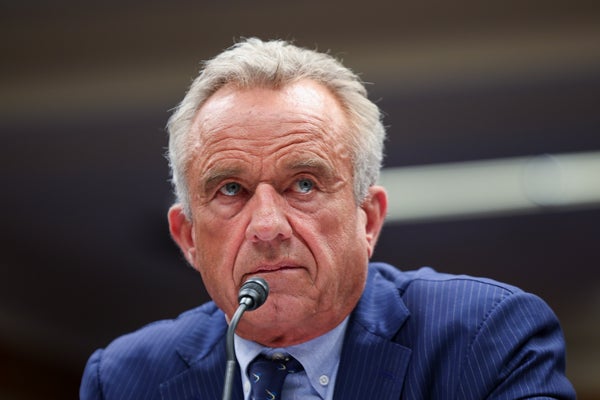
A federal judge on Monday blocked major parts of Secretary of Health and Human Services Robert F. Kennedy, Jr.’s broad overhaul of U.S. vaccine policy in a decision that sides with six medical groups, including the American Academy of Pediatrics (AAP), which had challenged Kennedy’s rule changes in court.
U.S. District Judge Brian Murphy in Boston issued a stay on the U.S. Centers for Disease Control and Prevention’s decision to drop the number of routinely recommended childhood vaccines. The CDC had cut the number of diseases it recommended that all children receive vaccines against from 17 to 11. That decision, made in January, had been widely criticized by public health experts as risking children’s health.
“I think that from the standpoint of the children and the families of this country, they owe an enormous debt of gratitude to Judge Murphy, because he has now injected a degree of clarity into what we should be doing with regard to vaccine recommendations that was a little bit muddied up until now,” said Andrew Racine, the AAP’s president, at a press conference after the ruling was issued.
On supporting science journalism
If you're enjoying this article, consider supporting our award-winning journalism by subscribing. By purchasing a subscription you are helping to ensure the future of impactful stories about the discoveries and ideas shaping our world today.
The judge also blocked the appointments of 13 members of an influential independent vaccine advisory board called the Advisory Committee on Immunization Practices (ACIP) because they likely violated the Federal Advisory Committee Act. In one of his first acts as head of the Department of Health and Human Services, Kennedy fired all the previous members of ACIP and replaced them. Additionally, Murphy’s ruling temporarily reverses all the decisions made by panelists who had been appointed to ACIP by Kennedy. The medical organizations had argued in their lawsuit that Kennedy’s appointed ACIP members lacked the qualifications necessary to recommend vaccine policy.
“We have been saying all along, and we continue to say that if we’re going to have vaccine recommendations for the children and families of this country, it has to be based on science,” Racine said.
The panel was set to meet on Wednesday to discuss vaccine policy recommendations, but following the judge’s ruling, the lead counsel for the AAP’s lawsuit questioned whether ACIP would do so.
“HHS looks forward to this judge’s decision being overturned just like his other attempts to keep the Trump administration from governing,” HHS spokesman Andrew Nixon said in a statement.
Additional reporting by Lauren Young.
Editor’s Note (3/16/26): This is a developing story and will be updated.