
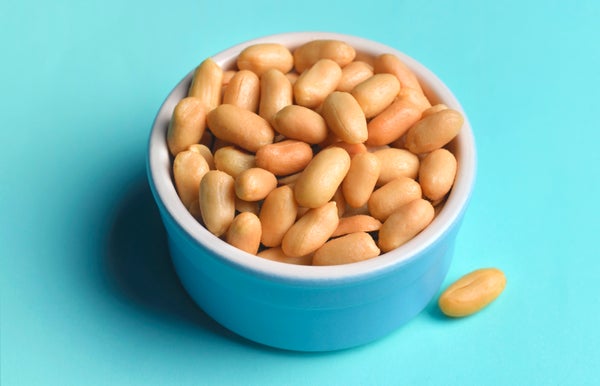
At an event on Monday, Secretary of Health and Human Services Robert F. Kennedy, Jr., linked peanut allergies in children to environmental toxins such as aluminum in vaccines and pesticides—and not to a lack of early exposure to peanuts.
Peanut allergies had been on the rise over the past few decades but dropped precipitously in recent years—an effect that experts have attributed to guidance issued in 2017 and updated in 2021 that parents should expose their babies to peanuts and other common allergens starting at four to six months of life. Older guidelines had suggested waiting until the age of three.
Kennedy, however, dismissed this evidence, pointing instead to aluminum in vaccines or pesticides in the environment as potential triggers for food allergies. The comments follow a claim from U.S. president Donald Trump in September that aluminum in vaccines is harmful. The Food and Drug Administration announced in October that it is studying the metal’s use.
On supporting science journalism
If you're enjoying this article, consider supporting our award-winning journalism by subscribing. By purchasing a subscription you are helping to ensure the future of impactful stories about the discoveries and ideas shaping our world today.
Aluminum is common in many foods and in the environment. And to boost the body’s immune response, it is added to some vaccines—such as those for human papillomavirus (HPV) and tetanus, diphtheria and pertussis (Tdap), as well as some combination vaccines that protect against polio. The amount of aluminum in vaccines is less than that found in infant formula and breast milk and has not been found to be harmful.
Removing aluminum from vaccines would require reformulating them entirely, something that is very unlikely to happen, said Peter Jay Hotez, a vaccine expert at Baylor College of Medicine, in a previous interview with Scientific American.
As for pesticides, there is little strong evidence that they cause food allergies. A 2022 research review suggests a link between pesticide exposure and asthma in children.
There is, however, significant evidence that food allergies, and peanut allergies in particular, are caused by a lack of exposure to the foods in question early in life. A 2015 randomized trial in the New England Journal of Medicine found that kids who were fed peanuts before age five had significantly lower odds of developing a peanut allergy compared with kids whose families were told to avoid exposure.
Scientists also suspect that other factors, such as cesarean sections and antibiotic use, may also play a role in triggering food allergies.