
On supporting science journalism
If you're enjoying this article, consider supporting our award-winning journalism by subscribing. By purchasing a subscription you are helping to ensure the future of impactful stories about the discoveries and ideas shaping our world today.
More than three million barrels of oil have been spilled in the Niger Delta, part of nearly 7,000 such accidents since 1976. This human and ecological catastrophe can now be seen from orbit.
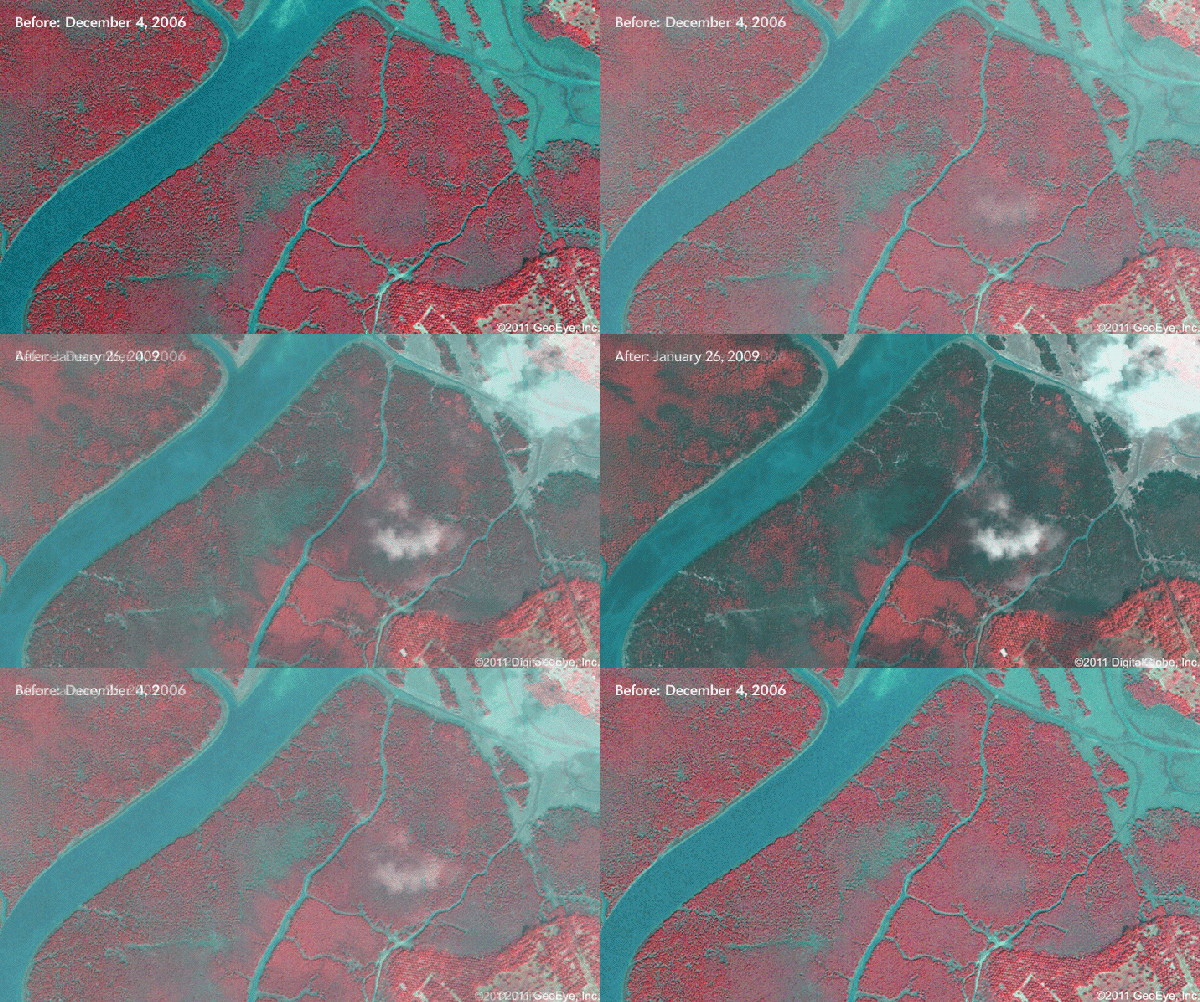
Comparing satellite images taken before and after known oil spills—like the one that flowed from late 2008 to early 2009 near Bodo, Nigeria—a swath of devastation becomes apparent. In 2006, despite years of oil extraction, thick tropical vegetation blanketed the region, as evidenced by the healthy red glow picked up by the satellite's infrared eye.
By January 2009 death had eaten through the landscape, appearing in green and black, concentrating on those areas touching the oil-polluted river. The water itself sported a rainbow sheen, whereas mud in the tidal flats changed from yellow to an oily gray. All told, oil contaminated some three square kilometers of waterways and landscapes.
The American Association for the Advancement of Science Geospatial Technologies and Human Rights Project carried out the research in support of an Amnesty International effort known as "Eyes on Nigeria." The campaign aims to monitor conflict in Nigeria as well as environmental hazards such as oil spills and gas flares, which have been banned since 2008 but can still be detected from space. In the vicinity of Bodo the goal is to force Shell oil company to pay $1 billion to clean up the oil contamination and its aftermath.
-- David Biello