New Issue: Orbital Catastrophe Ahead? Read Now

Scaly-Headed Moth Named after Trump

The new species, native to California and Mexico, sports a pompadour of yellowish-white scales

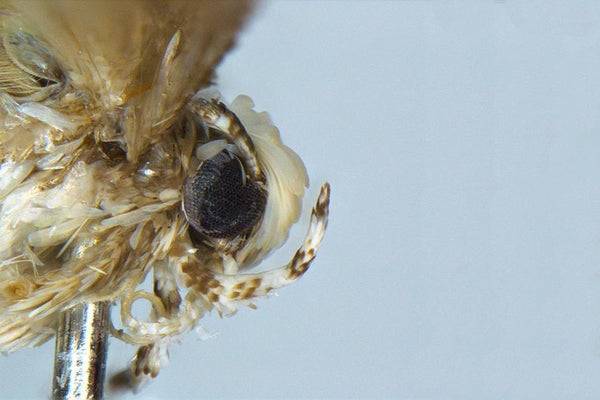
A close up of the head of the holotype of the new species Neopalpa donaldtrumpi.

Join Our Community of Science Lovers!

By Curtis Skinner

Jan 19 (Reuters) - A small moth with a yellowish-white coif of scales has been named after U.S. President-edit Donald Trump, in honor of the former reality TV show host and real estate magnate's signature hairdo.

The new species, dubbed Neopalpa donaldtrumpi, lives in a habitat that spans southern California and Mexico's Baja California and was named by evolutionary biologist Vazrick Nazari in an article published in the scientific journal ZooKeys.


On supporting science journalism

If you're enjoying this article, consider supporting our award-winning journalism by subscribing. By purchasing a subscription you are helping to ensure the future of impactful stories about the discoveries and ideas shaping our world today.


The moth, the second species of a genus of twirler moths, can be distinguished by the yellowish-white scales on the head of its adults, according to the journal.

"The specific epithet is selected because of the resemblance of the scales on the frons (head) of the moth to Mr. Trump's hairstyle," Nazari wrote in the article, which was published on Tuesday.

"The reason for this choice of name is to bring wider public attention to the need to continue protecting fragile habitats in the U.S. that still contain many undescribed species," he added.

News of the naming came the week Trump is set to be inaugurated as the 45th president of the United States, on Friday.

Trump will not be the first president to have an animal named after him. Just last month, a fish native to the coral reefs of northwestern Hawaii was named after current U.S. President Barack Obama in honor of his efforts to protect the fish's habitat.

Subscribe to Support Independent Journalism

Great science journalism requires human expertise, time, effort and creativity. And it costs money. That’s why I and the journalists here at Scientific American hope you’ll join our community.

When you subscribe, you are supporting staff and freelance journalists who are passionate about telling science stories that are true, important and compelling. Our editors and reporters are often experts in their fields, which means they understand the nuances of big discoveries and can untangle the breakthroughs from the hype. With a subscription, you are also supporting rigorous fact-checking to ensure the words we publish are precise and accurate. And you’re supporting original illustrations, graphics and photos that bring you closer to an advanced laboratory, an ice sheet in Antarctica or a space mission in orbit. You’re helping us craft other types of high-quality journalism as well: Our newsletters are carefully written, edited and curated by staffers you have or will come to know and love. Our Science Quickly podcast is based on original reporting, collaboration with editors and scientists and exacting production.

Subscriptions keep this engine running so we can continue to deliver thoughtful, rigorous and independent science journalism to you. In an era of viral misinformation, this work is crucial. If you value what we do, I hope you’ll consider joining us as a subscriber

Thank you,

Jeanna Bryner, Editor in Chief, Scientific American

Subscribe